Evidence Collection from Mobile Phones (Mobile Forensics)
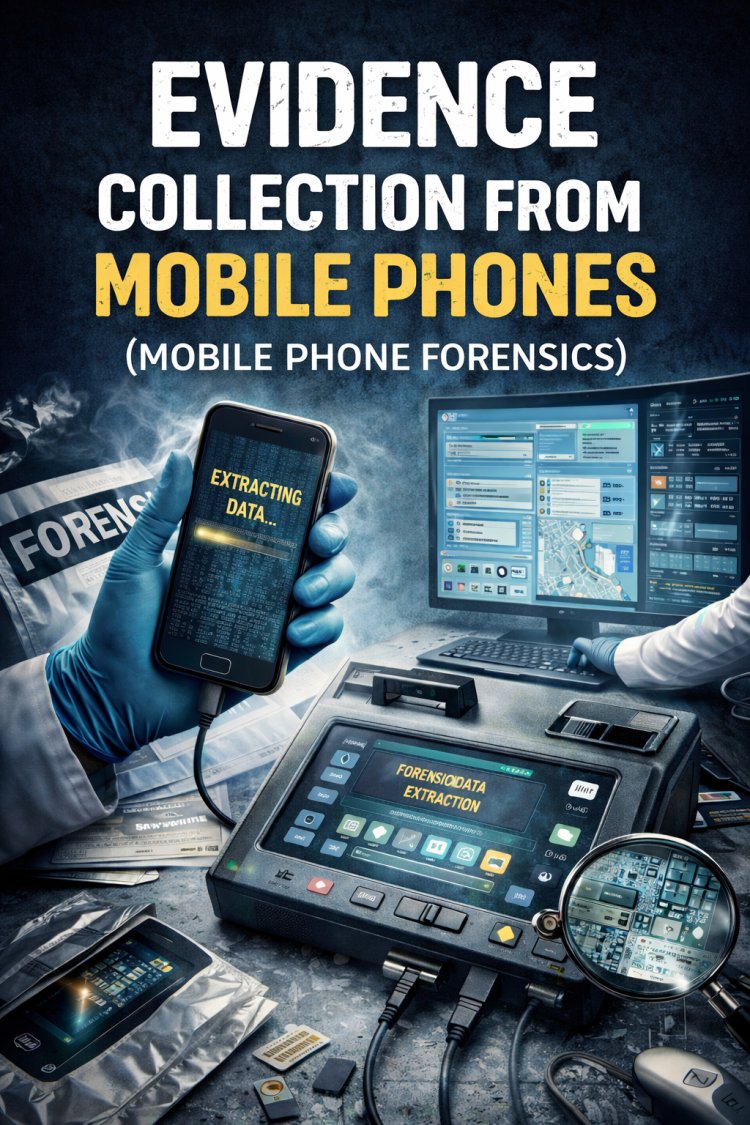
Mobile phone evidence collection is a systematic forensic process used to obtain digital data from mobile devices in a legally acceptable way. Smartphones store a large amount of personal and communication data, making them a major source of digital evidence in criminal investigations. Mobile phone forensic investigation generally follows five major phases: Identification Preservation Acquisition (Extraction) Examination and Analysis Documentation and Reporting
1. Identification of Mobile Phone Evidence
The first step in mobile forensics is identifying all potential digital devices at the crime scene.
Devices that may contain evidence
Investigators search for:
-
Smartphones
-
Feature phones
-
SIM cards
-
Memory cards (SD cards)
-
Tablets
-
Smartwatches connected to phones
-
Chargers and USB cables
-
Power banks
-
Bluetooth devices
Documentation at the Scene
Before touching the device, investigators record:
-
Location of the phone
-
Whether the phone is ON or OFF
-
Screen condition (locked/unlocked)
-
Network connectivity
-
Visible notifications
Photographing the Evidence
Photographs are taken showing:
-
Phone position
-
Screen display
-
Device surroundings
-
Serial numbers or IMEI
These records help maintain authenticity in court.
2. Preservation of Mobile Evidence
Preservation ensures no alteration, deletion, or contamination of digital evidence.
Mobile phones are highly vulnerable to:
-
Remote data deletion
-
Automatic updates
-
Incoming calls or messages
-
Network synchronization
Methods of Preservation
Airplane Mode
If the device is unlocked, investigators may activate airplane mode to block network signals.
Faraday Bags
Phones are often placed in Faraday bags, which block:
-
Cellular signals
-
Wi-Fi
-
Bluetooth
-
GPS signals
This prevents remote wiping or tampering.
Battery Management
-
If the phone is ON, investigators may keep it powered to avoid encryption lock.
-
If OFF, it is usually kept off until laboratory analysis.
Chain of Custody
Every person who handles the device must be recorded in the chain of custody log, including:
-
Time
-
Date
-
Person handling the device
-
Purpose of handling
This ensures the evidence remains legally valid.
3. Data Acquisition (Extraction)
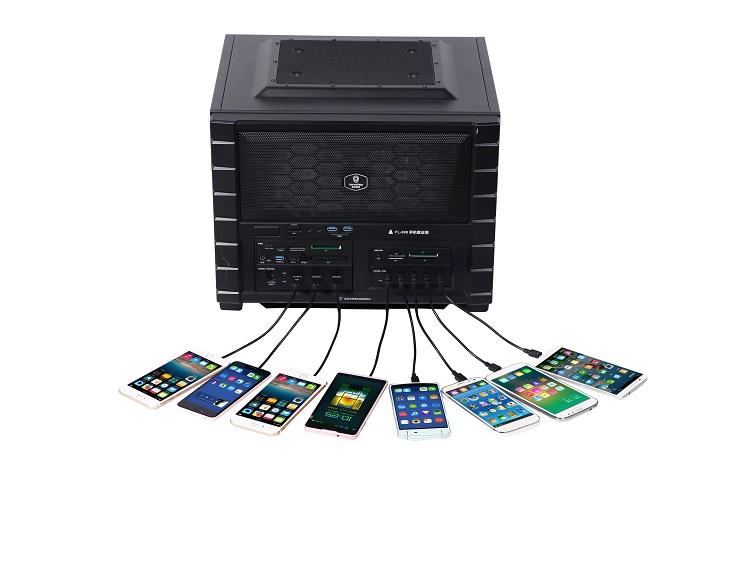
Data acquisition means copying digital information from the device without altering the original data.
Investigators typically work on a forensic copy instead of the original device.
There are four major extraction techniques.

1. Manual Extraction
In this method, investigators manually view the phone’s content.
Process
-
Navigate through the phone menu
-
Photograph important data
Data collected
-
Contact list
-
Call history
-
SMS messages
-
Photos and videos
Advantages
-
Simple
-
No specialized tools needed
Limitations
-
Time consuming
-
Cannot recover deleted data
2. Logical Extraction
Logical extraction retrieves data using the phone’s operating system interface.
Data retrieved
-
Contacts
-
Messages
-
Call logs
-
Calendar entries
-
Application data
-
Media files
Common Tools
-
Cellebrite UFED
-
Oxygen Forensic Detective
-
MOBILedit
-
XRY
Advantages
-
Faster
-
Automated
-
Preserves metadata
Limitations
-
Cannot access hidden or deleted files
3. File System Extraction
This method allows access to the entire file structure of the device.
Data obtained
-
System files
-
Application databases
-
Hidden folders
-
Logs
Advantages
-
Deeper access than logical extraction
Limitations
-
Requires advanced tools
-
May not work on all devices
4. Physical Extraction
Physical extraction creates a bit-by-bit copy of the phone's memory.
Data recovered
-
Deleted files
-
Hidden data
-
Unallocated memory space
-
System data
Advanced Techniques
Chip-off Technique
Memory chip is removed from the phone and analyzed separately.
JTAG Method
Accesses the device memory through test access ports.
Advantages
-
Most comprehensive method
Limitations
-
Complex
-
Risk of device damage
4. Types of Data Recovered from Mobile Phones
Mobile devices store a wide variety of digital information.
Communication Evidence
-
Call logs
-
SMS and MMS
-
Emails
-
Messaging apps (WhatsApp, Telegram, Signal)
Multimedia Evidence
-
Photos
-
Videos
-
Voice recordings
-
Screenshots
Internet Evidence
-
Browsing history
-
Downloaded files
-
Cookies
-
Cached data
Application Data
-
Social media activity
-
Banking transactions
-
Ride-sharing records
-
E-commerce purchases
Location Evidence
-
GPS coordinates
-
Google Maps history
-
Cell tower connections
-
Wi-Fi network history
Device Information
-
IMEI number
-
Device serial number
-
SIM card data
-
OS version

5. Analysis of Mobile Phone Evidence
After extraction, forensic analysts examine the data.
Key analysis methods
Timeline Reconstruction
Investigators create a timeline of activities such as:
-
Calls made
-
Messages sent
-
App usage
-
Location changes
Communication Analysis
Identifies:
-
Contacts frequently communicated with
-
Suspicious messages
-
Network relationships
Deleted Data Recovery
Special tools recover:
-
Deleted messages
-
Deleted photos
-
Deleted chat logs
Location Tracking
GPS and network data can show:
-
Suspect movement
-
Crime scene presence
- Travel patterns
6. Reporting and Presentation
The final stage is preparing a forensic report.
Contents of the Report
-
Device description
-
Evidence collection method
-
Tools used
-
Extraction results
-
Screenshots
-
Timeline of events
-
Expert conclusions
Reports must be clear, objective, and scientifically valid.
7. Challenges in Mobile Phone Forensics
Mobile forensic investigations face many difficulties.
Encryption
Modern phones use strong encryption.
Locked Devices
Access may require:
-
PIN
-
Password
-
Fingerprint
-
Face ID
Rapid Technology Changes
New operating systems appear frequently.
Cloud Storage
Data may be stored remotely instead of locally.
Anti-Forensic Techniques
Suspects may use apps that automatically delete messages.
Follow cyberdeepakyadav.com on
Facebook, Twitter, LinkedIn, Instagram, and YouTube
What's Your Reaction?