Rs 3,000 Crore Fraud Uncovers Haryana-Madhya Pradesh Cyber Crime Corridor
The majority of the fraudsters were early-twenties school dropouts who operated a very effective digital empire out of a Gurugram apartment where an illicit call center served as the command center for cybercrimes across India.
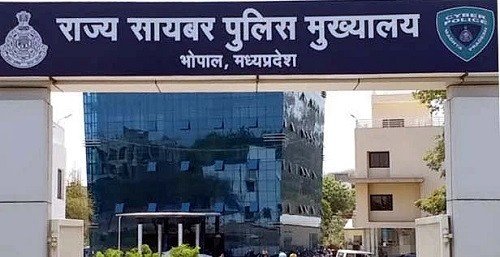
At the confluence of the Nuh district in Madhya Pradesh and Haryana, a troubling web of fraud, crime, and even terror financing is beginning to take shape. Southeast Haryana's Nuh district has long suffered from socioeconomic distress, unemployment, and lax law enforcement. However, in recent years, it has evolved into the nation's most hazardous center for cybercrime, surpassing Jamtara in scope, sophistication, and danger.
Earlier this year, the Madhya Pradesh police discovered the largest-ever cybercrime scheme in the state, valued at over Rs 3,000 crore. As the investigation progressed, it became evident that the operation's masterminds were based in Nuh rather than Madhya Pradesh. Despite being in their early twenties and having dropped out of school, the majority of them managed a highly effective digital empire from an apartment in Gurugram, where an illicit call center served as the command center for cybercrimes throughout India. Every day, fraud calls about cryptocurrency trading, investment schemes, job scams, and fictitious threats from law enforcement were made from this flat.
Haryana-Madhya Pradesh Cyber Crime Nexus
The case's relationship to Madhya Pradesh is what makes it more troubling. Fraud money was channeled through more than 1,000 mule bank accounts, the majority of which belonged to impoverished people in the Mahakoshal and Vindhya districts. Although these account holders were promised benefits from government programs, their accounts ended up being used as a means of money laundering.
Over Rs 3,000 crore flowed through these accounts in a convoluted fashion in less than two years, going to several Indian cities and, frequently, being transferred overseas. Significant sums finally made it to the Middle East, according to investigators. The question of whether these payments were just connected to cyber fraud or connected to something more nefarious, such as funding for terrorism, hawala networks, or religious organizations, is still being investigated and is quite delicate.
A second group of operatives obtained hundreds of SIM cards from Madhya Pradesh in addition to these mule accounts. After being transferred from Madhya Pradesh to Patna, the SIM cards were packaged and sent to the masterminds in Nuh via middlemen. Thousands of Indians received calls about cybercrime using these SIMs as their foundation. In order to conceal the source of illicit finances, the Nuh operators also operated shell corporations in Hyderabad and several areas of Maharashtra. All of the racket's layers, including fund routing, mule account administration, SIM sourcing, and recruitment, are eventually connected to Nuh.
The chief of Madhya Pradesh's Cyber Cell, SP Pranay Nagwanshi, remembers when the scale first became apparent. "A large number of fake SIM cards were being sold in Jabalpur, Katni, Rewa, Sidhi, Satna and surrounding areas," according to him.
"When we launched an operation last month, we discovered new centres in Damoh, Dindori, Shivpuri, Gwalior and even around Indore," he stated.
Madhya Pradesh - A Supply Base
It was evident that one of the biggest criminal networks in the nation was using Madhya Pradesh as a source of raw materials, hollowing out the state from the inside out.
Beyond local agents, there was broader complicity.
"In certain instances, opening accounts was done by bank workers. Through their recommendations, several mule accounts were opened. "We have also taken action against them," Nagwanshi stated.
Villagers' names were linked to transactions worth crores, despite their limited knowledge of digital technology. They frequently rented out their accounts for as little as Rs 5,000 per month.
Nagwanshi clarified, "If people realized their accounts were being misused, sometimes the rent went up to Rs 10,000. However, the amounts were never high enough to call them part of the nexus." They were merely taken advantage of for financial gain.
The results have been disastrous. Cybercrime is on the rise in the state like never before.
Cases Of Cyber Fraud
A retired medical officer in Indore was placed under "digital arrest" for a month after calls posing as representatives of the Telecom Regulatory Authority of India (TRAI) and even a Supreme Court judge threatened him. The man, terrified, moved all of his life's savings—Rs 4.32 crore—to accounts under the fraudsters' control.
Criminals posing as police personnel intimidated a 67-year-old retired bank manager and his spouse in Bhopal, claiming that their bank accounts had financed terrorists responsible for the bombings in Delhi. On the thieves' orders, the couple was imprisoned inside their house for a full day while they embezzled Rs 67 lakh.
Another terrifying story surfaced in Katni, where a doctor was intimidated by a person claiming to be an NIA official and claiming the doctor was connected to the Red Fort bombing case. Only until the victim's son saw the trap and informed cyber police did the fraud come to an end.
Police admitted that national disasters are used as weapons by criminals. "Since the Delhi bombings and the Jammu and Kashmir incident, threats of this nature have surged," Nagwanshi stated.
"Every new development is exploited by cybercriminals. They quickly turn fear into a weapon and use it to threaten and coerce people," he continued.
Shell Companies
Investigators were even more shocked by what they discovered next. Thousands of crores had been transferred through a number of mule accounts opening into shell businesses in Hyderabad and Maharashtra in one area of the network.
"A key finding was that many of these accounts were used to open shell companies, and large amounts of money were being transferred or deposited in the name of these companies," Nagwanshi stated.
When 68-year-old senior counsel Shivkumar Verma committed suicide in Bhopal after receiving a call alleging that a fictitious bank account opened in his name was being used to finance terrorists in Pahalgam, the human cost reached a terrible high.
He claimed in his last letter that the stigma of being labeled a traitor was too much for him to handle. The horrible psychological trauma of cybercrime was made public by his death.
Figures presented to the Madhya Pradesh Assembly indicate that things are getting worse. Cybercrime stole more than Rs 1,054 crore from Madhya Pradesh households between May 2021 and July 2025; the authorities have recovered less than 1%, or Rs 19.4 million.
Additionally, between 2020 and 2022, over four lakh reports of cybercrime were filed annually. Only 585 of the 13 cases that were registered during this time made it to the chargesheet stage; hundreds of cases are still pending.
Current Status
The data show a troubling lack of preparedness, according to MLA Jaivardhan Singh, who brought up the issue in the Assembly.
"This is very serious," he added. "Madhya Pradesh was robbed of over 1,000 crore rupees, and there has been very little recovery." The police lack the means and the commitment to combat cybercrime.
The state's cyber unit has already detained more than 25 people linked to the interstate cyber network amid this mayhem. Everybody has a charge sheet. The cops, however, think they have just begun. The true masterminds, who were in charge of every online thread, are still in Nuh.
According to cybercrime police, Nuh and surrounding areas of Rajasthan have surpassed more established locations like Jamtara to become India's top cybercrime hotspot.
He emphasized that because of the mix of mobility, anonymity, and criminal networks in Nuh, cybercrime networks were forced to relocate there as a result of years of crackdowns in Jharkhand and West Bengal.
While Madhya Pradesh struggles with this cyberattack, national security services face a bigger dilemma. Is India currently experiencing the development of a cyber-terror corridor if funds from the mule accounts were transferred to overseas locations, if the same networks show up in both cyber fraud and terror financing investigations, and if Nuh acts as a hub for extremist groups and financial crime?
Follow cyberdeepakyadav.com on
Facebook, Twitter, LinkedIn, Instagram, and YouTube
What's Your Reaction?