Artificial Intelligence (AI) in Forensic Science
Artificial Intelligence (AI) is transforming forensic science by helping investigators analyze evidence faster, more accurately, and on a much larger scale than traditional methods.
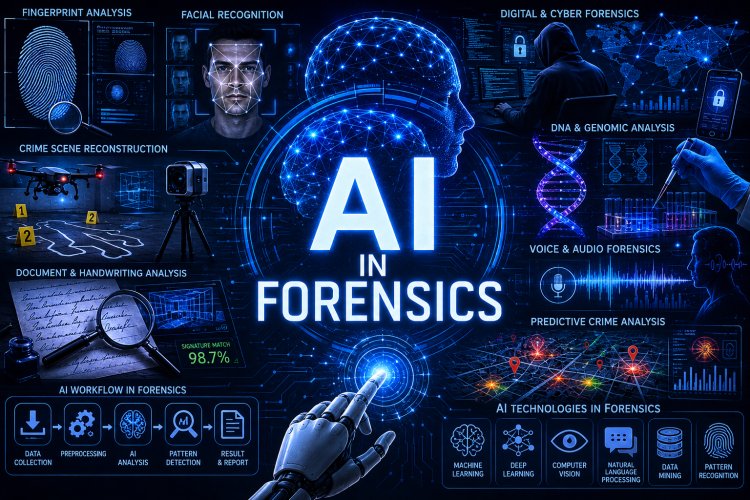
In forensic science, AI refers to the use of:
- Machine Learning (ML)
- Deep Learning
- Computer Vision
- Natural Language Processing (NLP)
- Pattern Recognition
- Neural Networks
to assist in:
- crime investigation,
- evidence analysis,
- suspect identification,
- digital investigations,
- and courtroom reporting.
AI does not replace forensic experts, but acts as a powerful decision-support tool.
What is AI in Forensics?
AI in forensics means using intelligent computer systems to:
- identify patterns,
- compare evidence,
- predict relationships,
- automate repetitive tasks,
- and support criminal investigations.
These systems learn from large datasets and improve performance over time
Major Areas Where AI is Used in Forensics
1. Fingerprint Analysis
Traditionally, fingerprint matching required manual comparison by experts.
AI now helps by:
- scanning fingerprints,
- enhancing low-quality prints,
- identifying ridge patterns,
- and matching prints automatically.
AI Techniques Used
- Deep neural networks
- Image recognition
- Pattern matching algorithms
Advantages
- Faster matching
- Reduced human error
- Identification from partial fingerprints
Example
Automated Fingerprint Identification Systems (AFIS) use AI to compare fingerprints against millions of records.
2. Facial Recognition & Image Forensics
AI can identify individuals using:
- CCTV footage,
- photographs,
- social media images,
- airport surveillance,
- and video recordings.
Applications
- Suspect identification
- Missing person identification
- Border security
- Criminal tracking
AI Methods
- Facial landmark mapping
- Biometric analysis
- Deep learning-based image recognition
Emerging Trend
AI is now also used to detect:
- fake images,
- edited photos,
- and deepfakes.

3. Digital & Cyber Forensics
One of the fastest-growing areas.
AI helps investigators analyze massive digital evidence from:
- computers,
- smartphones,
- emails,
- cloud systems,
- and social media.
AI Applications
- Malware detection
- Cyberattack tracing
- Data recovery
- Suspicious behavior detection
- Network traffic analysis
Example
AI can identify ransomware behavior within seconds by recognizing unusual patterns.
4. Voice & Audio Forensics
AI can analyze:
- speech patterns,
- background sounds,
- voice frequency,
- and speaker characteristics.
Uses
- Speaker identification
- Threat call analysis
- Audio enhancement
- Deepfake voice detection
Technologies
- Speech recognition
- Natural Language Processing (NLP)
- Acoustic modeling
5. DNA & Genomic Analysis
AI accelerates DNA interpretation and biological evidence analysis.
AI Helps In
- DNA sequence analysis
- Familial matching
- Predicting ancestry
- Identifying genetic relationships
Emerging Technology
AI-based DNA phenotyping can estimate:
- eye color,
- hair color,
- skin tone,
- and ancestry from DNA samples.
6. Crime Scene Reconstruction
AI combined with:
- 3D imaging,
- VR,
- drones,
- and computer vision
can reconstruct crime scenes digitally.
Uses
- Bullet trajectory analysis
- Blood spatter interpretation
- Accident reconstruction
- Virtual courtroom demonstrations
Benefits
Investigators can revisit digital crime scenes multiple times.
7. Predictive Crime Analysis
AI can analyze crime data to identify:
- crime hotspots,
- criminal patterns,
- repeated offenders,
- and possible future crimes.
Data Sources
- Police databases
- Social media
- Surveillance records
- Geographic data
Example
Predictive policing systems suggest areas where crimes are more likely to occur.
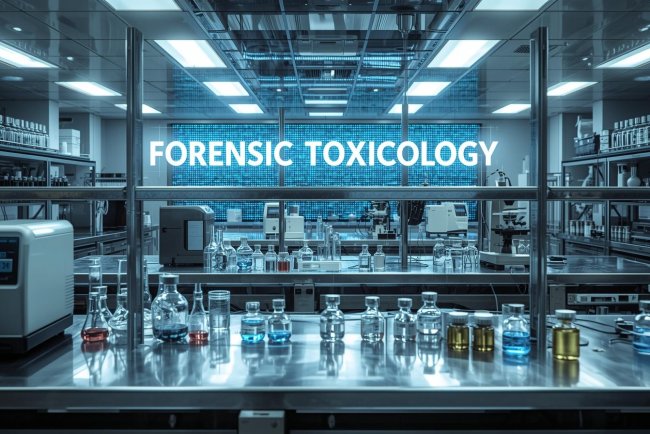
8. AI in Forensic Toxicology
AI helps detect:
- drugs,
- poisons,
- alcohol,
- and chemical substances.
Applications
- Automated chemical analysis
- Drug identification
- Pattern analysis in toxicology reports
AI Tools
- Spectral analysis algorithms
- Machine learning classifiers

9. Document & Handwriting Examination
AI can examine:
- signatures,
- handwriting,
- printed documents,
- and forged records.
Uses
- Signature verification
- Forgery detection
- Ink analysis
- Document authenticity checking
Methods
- Image processing
- Neural networks
- Character recognition systems
10. AI in Legal & Courtroom Support
AI is now helping prepare forensic reports and organize evidence.
Applications
- Evidence summarization
- Automated report generation
- Case database management
- Legal document analysis
Emerging Trend
Large Language Models (LLMs) are being tested to assist investigators in:
- report drafting,
- evidence review,
- and cybercrime analysis.
Technologies Used in AI Forensics
| Technology | Purpose |
|---|---|
| Machine Learning | Pattern learning |
| Deep Learning | Image & speech analysis |
| Computer Vision | Video/image recognition |
| Neural Networks | Complex prediction |
| NLP | Text and speech processing |
| Data Mining | Hidden pattern extraction |
| Robotics | Automated forensic operations |
Advantages of AI in Forensic Science
1. Speed
AI analyzes evidence much faster than humans.
2. Accuracy
Reduces manual errors in evidence examination.
3. Automation
Automates repetitive forensic tasks.
4. Large Data Handling
Can process millions of records quickly.
5. Better Pattern Recognition
Detects hidden relationships humans may miss.
6. Cost Efficiency
Reduces long-term investigation costs.
Ethical Concerns
Important ethical issues include:
- surveillance misuse,
- wrongful identification,
- algorithmic discrimination,
- lack of transparency,
- and data misuse.
Responsible AI practices are becoming essential in forensic investigations.
Future of AI in Forensics
The future is expected to include:
- AI-powered smart forensic labs
- Real-time crime scene analysis
- Autonomous forensic robots
- Advanced cybercrime detection
- AI-driven courtroom visualization
- Quantum-AI forensic systems
AI will likely become a standard part of forensic investigations globally.
Follow cyberdeepakyadav.com on
Facebook, Twitter, LinkedIn, Instagram, and YouTube
What's Your Reaction?