Mumbai Retiree Loses ₹9.94 Crore in Fake Trading App Scam Posing as Anand Rathi — A Deep Dive into India’s New-Age Cyber Frauds”
A 65-year-old retiree from Mumbai lost nearly ₹10 crore after falling prey to a fake trading app, “AR Trade Mobi,” posing as Anand Rathi Shares & Stock Brokers. This investigation unravels how scammers built a convincing digital ecosystem — complete with WhatsApp groups, dashboards, and customer support — to execute one of India’s most sophisticated financial frauds of 2025.

The First Contact: A Routine Message That Turned into a Multi-Crore Cyber Fraud
A Deceptive Beginning
In June 2025, a 65-year-old retired professional from Mulund, Mumbai, received what appeared to be an ordinary WhatsApp message.
The sender — identifying herself as Suman Gupta, an “admin” from Anand Rathi Shares & Stock Brokers Ltd. — introduced a new trading opportunity through an app called “AR Trade Mobi.”
To lend authenticity, the sender shared a registration link and requested PAN and personal details under the pretext of KYC verification.
Initially, the approach appeared legitimate — market updates, IPO alerts, and investment insights followed, reinforcing the illusion of credibility.
Unbeknownst to the complainant, the interaction marked the beginning of a highly sophisticated digital scam.
The Illusion of Returns
Upon completing registration, the victim was added to a WhatsApp group named “Anand Rathi VIP 12.”
Several members — impersonating financial experts — actively shared investment tips, market trends, and screenshots of impressive returns.
The fraudsters replicated the language, tone, and professionalism typical of real wealth managers.
Even the fake trading app displayed realistic dashboards, charts, and profit indicators, identical to legitimate trading platforms.
The apparent profits reflected on the app boosted the victim’s confidence, prompting him to invest increasingly larger sums.
Between June and November 2025, the victim transferred a staggering ₹9,94,76,958 into multiple bank accounts, believing he was participating in IPO bids and mutual fund investments.
Behind the scenes, however, every figure and update on the app was fabricated to sustain the illusion of a flourishing portfolio.
The Collapse of Trust
Trouble surfaced when the complainant attempted to withdraw his returns.
Each transaction failed, with customer support — managed by the fraudsters — citing “technical issues” and demanding additional payments for “taxes” and “commissions.”
Growing suspicious, the victim visited the official Anand Rathi office in Malad (East) to verify the claims.
There, company representatives confirmed:
-
No employee named Suman Gupta was associated with the firm.
-
No app called “AR Trade Mobi” existed under their brand.
-
No official WhatsApp investment groups were operated by the company.
The revelation confirmed the devastating truth — he had fallen victim to a meticulously engineered cyber fraud.
The Investigation Expands
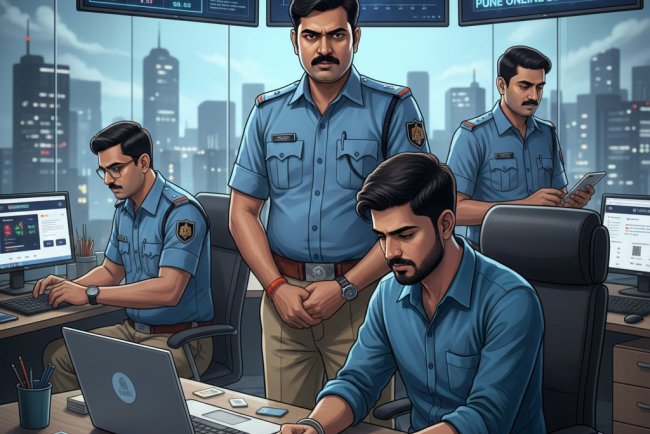
Following the complaint, the East Region Cyber Police Station registered an FIR against ten unidentified individuals under the Bharatiya Nyaya Sanhita (BNS) and the Information Technology Act.
According to officials, efforts are underway to trace the money trail across numerous mule bank accounts.
Preliminary findings suggest the operation may be linked to organized cybercrime networks active across multiple states.

A Modern Lesson in Digital Deception
This case underscores the alarming rise of socially engineered financial scams in India.
Fraudsters are no longer relying on basic phishing — they now replicate entire corporate ecosystems, complete with fake apps, groups, and support systems.
The incident serves as a stark reminder:
-
Always verify apps through official websites or Play Store publishers.
-
Never share KYC or banking details over WhatsApp or unverified links.
-
Directly contact company helplines before transferring funds.
In the digital age, authenticity is no longer about appearance — it’s about verification.
Follow cyberdeepakyadav.com on
Facebook, Twitter, LinkedIn, Instagram, and YouTube
What's Your Reaction?