Forensic DNA Phenotyping (FDP)
Forensic DNA Phenotyping (FDP) goes beyond identification and enters predictive genomics. Instead of matching DNA profiles (STR-based), FDP analyzes functional regions of DNA that influence observable traits (phenotypes).
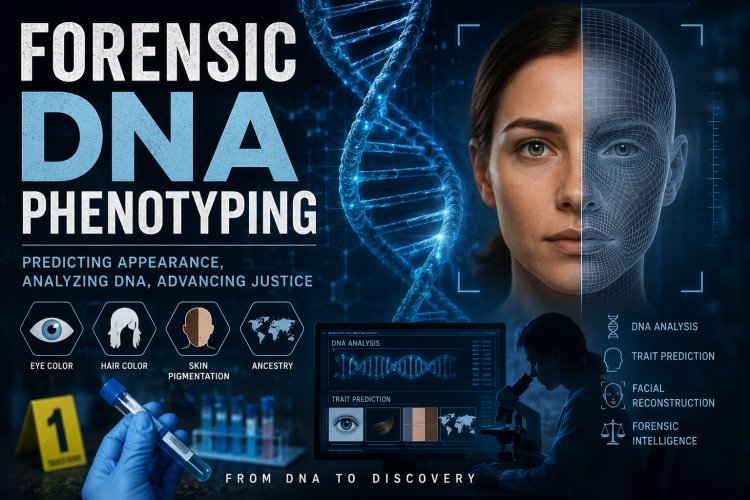
Genotype (DNA) → Biological pathways → Physical traits (Phenotype)
- Traditional forensics = Who is this?
- FDP = What might this person look like?
Genetic Basis (Deep Science)
A. SNPs (Single Nucleotide Polymorphisms)
- FDP mainly relies on SNP markers, not STRs
- SNP = variation at a single base (A, T, G, C)
- Example: A → G change affecting pigmentation
Why SNPs?
- More stable than STRs
- Better for degraded DNA
- Directly linked to functional traits
B. Pigmentation Genetics
Key Genes:
- OCA2 & HERC2 → Eye color (blue/brown variation)
- MC1R → Red hair phenotype
- SLC24A5, SLC45A2 → Skin pigmentation
- TYR (Tyrosinase) → Melanin production
Mechanism:
- Melanin types:
- Eumelanin → Brown/black
- Pheomelanin → Red/yellow
Variation in these genes alters melanin production → visible traits
C. Polygenic Nature of Traits
- Most traits are polygenic (controlled by many genes)
- FDP uses statistical models combining multiple SNPs
Example:
- Eye color prediction may use ~6–20 SNPs
- Skin color may use >30 SNPs

3. Laboratory Workflow (Technical Pipeline)
Step 1: DNA Extraction
- Methods: Organic extraction, Chelex, silica-based
- Works even on:
- Degraded samples
- Trace DNA
Step 2: DNA Quantification
- Using qPCR (Quantitative PCR)
- Ensures enough DNA for sequencing
Step 3: Library Preparation
- DNA fragmented + adapters added
- Target SNP regions amplified
Step 4: Sequencing (NGS)
- Platforms:
- Illumina MiSeq
- Ion Torrent
Generates millions of reads covering SNP regions
Step 5: Bioinformatics Analysis
- Raw data → cleaned → aligned to reference genome
- SNP calling performed
- Output: genotype (AA, AG, GG)
Step 6: Prediction Modeling
- Algorithms used:
- Logistic regression
- Bayesian models
- Machine learning
Step 7: Facial Approximation
- Software converts predictions into:
- 2D sketches
- 3D models

Prediction Systems
HIrisPlex System
- Predicts eye & hair color
- Accuracy:
- Eye color: ~90%
- Hair color: ~70–80%
HIrisPlex-S
- Adds skin color prediction
SNAPSHOT (Parabon NanoLabs)
- Generates facial composites
Accuracy & Reliability
| Trait | Accuracy Level |
|---|---|
| Eye Color | ⭐⭐⭐⭐ (High) |
| Hair Color | ⭐⭐⭐ (Moderate) |
| Skin Color | ⭐⭐⭐⭐ (High) |
| Face Shape | ⭐⭐ (Low–Developing) |
Important: FDP gives probabilities, not certainty

Legal & Ethical Dimensions
Privacy Concerns
- DNA reveals sensitive info:
- Ancestry
- Disease predisposition
Risk of Bias
- Misinterpretation → racial profiling
Legal Status
- Allowed (restricted use):
- Netherlands, Germany, USA (case-based)
- Not widely accepted in many countries
Integration with Other Forensic Fields
FDP is often combined with:
- Forensic genealogy (family tree matching)
- STR profiling
- Anthropology
- Facial recognition AI

Advanced Research Areas
Epigenetics in FDP
- DNA methylation used to predict:
- Age
- Lifestyle (smoking, stress)
AI-based Face Prediction
- Deep learning models linking DNA → facial structure
Microbiome Forensics
- Skin bacteria may help identify individuals
Follow cyberdeepakyadav.com on
Facebook, Twitter, LinkedIn, Instagram, and YouTube
What's Your Reaction?