Cyber Forensics & Incident Response
Cyber Forensics and Incident Response (often called DFIR – Digital Forensics & Incident Response) is a critical domain in cybersecurity focused on detecting, responding to, investigating, and preventing cyber attacks.
Cyber (Digital) Forensics
What is Cyber Forensics?
Cyber Forensics is the process of identifying, collecting, preserving, analyzing, and presenting digital evidence from cyber incidents in a legally admissible manner.
Objectives:
- Find what happened
- Identify how it happened
- Determine who did it
- Collect evidence for legal proceedings
Types of Digital Forensics:
- Computer Forensics
- Hard disks, deleted files, logs
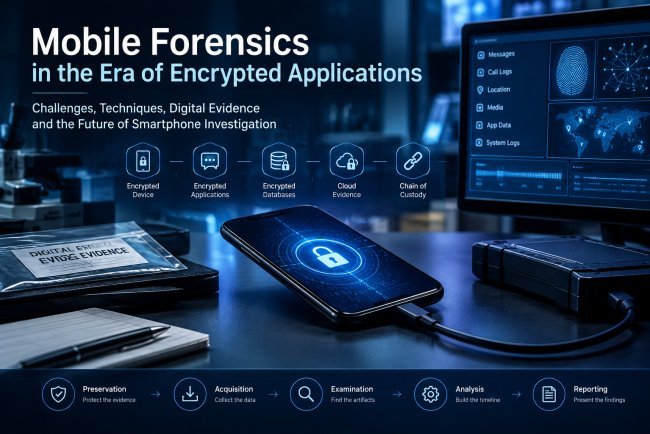
- Mobile Forensics
- WhatsApp chats, call logs, app data
- Network Forensics
- Packet capture, traffic analysis (Wireshark)
- Cloud Forensics
- AWS, Google Cloud logs, SaaS data
- Malware Forensics
- Reverse engineering malicious software
Digital Forensics Process:
- Identification
- Detect incident and affected systems
- Preservation
- Secure data (no tampering)
- Maintain chain of custody
- Collection
- Acquire data using tools (FTK, EnCase, Autopsy)
- Examination
- Recover deleted files, extract artifacts
- Analysis
- Timeline analysis, user activity tracking
- Presentation
- Prepare forensic report for court or organization

Common Tools:
- FTK (Forensic Toolkit)
- EnCase
- Autopsy
- Magnet AXIOM
- Cellebrite UFED
- Wireshark
Incident Response (IR)
Objectives:
- Stop the attack quickly
- Reduce damage
- Recover systems
- Prevent future incidents
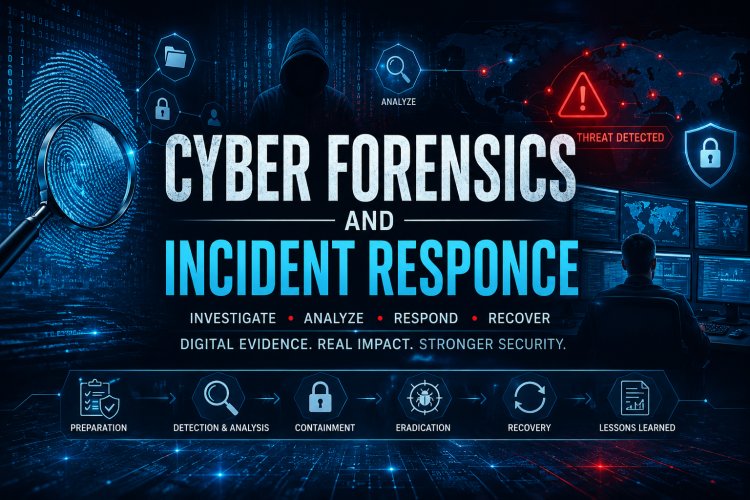
Incident Response Lifecycle:
1. Preparation
- Security policies
- Incident Response Team (IRT)
- Tools & training
2. Detection & Analysis
- Identify unusual activity
- Alerts from SIEM, IDS, antivirus
- Example: Suspicious login, malware detection

3. Containment
- Isolate infected system
- Block malicious IPs
Prevent spread
4. Eradication
- Remove malware
- Patch vulnerabilities
5. Recovery
- Restore systems
- Monitor for reinfection
6. Lessons Learned
- Analyze incident
- Improve security
What is Incident Response?
Incident Response is the structured approach to handling cyber attacks in real time to minimize damage and recover quickly.
Relationship Between Forensics & Incident Response
| Incident Response | Cyber Forensics |
|---|---|
| Focuses on stopping attack | Focuses on investigation |
| Real-time action | Post-incident analysis |
| Minimizes damage | Provides legal evidence |

Both work together:
- IR handles “what to do now”
- Forensics explains “what happened”
Key Concepts You Must Know
- Chain of Custody → Evidence integrity
- Volatile vs Non-Volatile Data
- Live Forensics → Analysis on running system
- Timeline Analysis → Sequence of events
- Indicators of Compromise (IoCs)
- SIEM & SOAR Tools
Follow cyberdeepakyadav.com on
Facebook, Twitter, LinkedIn, Instagram, and YouTube
What's Your Reaction?