Anti-Forensics & Data Hiding Techniques
This is one of the most critical and advanced topics in Cyber Forensics because it deals with how criminals try to hide, destroy, or manipulate digital evidence to avoid detection.
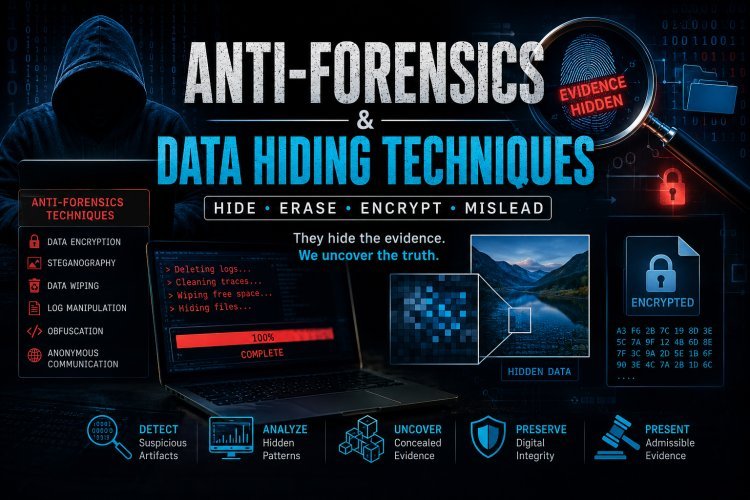
1. What is Anti-Forensics?
Anti-Forensics refers to techniques used by attackers to:
- Hide evidence
- Destroy data
- Mislead investigators
- Delay forensic analysis
Goal: Make investigation difficult or impossible
2. Major Categories of Anti-Forensics
1. Data Encryption
- Converts data into unreadable format
- Requires key/password to decrypt
Examples:
- BitLocker, VeraCrypt
- Encrypted messaging apps
Challenge:
- Without key → data becomes useless
2. Steganography (Data Hiding)
- Hiding data inside:
- Images
- Audio
- Videos
- Text
Example:
- Secret message hidden inside an image pixel
Tools:
- Steghide, OpenStego

3. Data Wiping / Secure Deletion
- Permanently deletes data
- Prevents recovery
Techniques:
- Overwriting (multiple times)
- Disk formatting
- File shredding
Tools:
- CCleaner, Eraser
4. Metadata Manipulation
- Changing file details like:
- Timestamp
- Author
- Location
Purpose:
- Mislead timeline analysis
5. Obfuscation
- Making code/data confusing
Examples:
- Renaming files
- Encoding scripts
- Packing malware
6. Log Manipulation
- Deleting or altering logs
Example:
- Removing login history
7. Anonymous Communication
- Hiding identity using:
- VPN
- TOR network
- Proxy servers
8. Fileless Malware
- Runs in memory (RAM)
- Leaves minimal traces on disk

3. Advanced Data Hiding Techniques
1. File System Manipulation
- Hidden partitions
- Alternate Data Streams (ADS)
2. Encryption + Steganography Combo
- Data encrypted first → then hidden
Very hard to detect
3. Network-Based Hiding
- DNS tunneling
- Covert channels
4. Memory-Only Storage
- Data stored only in RAM
- Disappears after shutdown

4. Detection Techniques
How Investigators Detect Anti-Forensics:
1. Hex Analysis
- Check hidden patterns in files
2. Steganalysis Tools
- Detect hidden data
Tools:
- StegExpose
- zsteg
3. Memory Forensics
- Analyze RAM
Tools:
- Volatility
- Rekall
4. Decryption Attempts
- Pass
- word cracking
- Brute-force / dictionary attacks
5. Log Correlation
- Compare multiple logs
- Detect inconsistencies
6. File Integrity Checking
- Hash comparison (MD5, SHA)

5. Challenges in Investigation
- Strong encryption
- Data completely wiped
- Hidden data undetectable
- Time-consuming analysis
- Legal restrictions
6. Legal Importance
- Must prove:
- Data was intentionally hidden
- Evidence is authentic
Courts require:
- Proper documentation
- Chain of custody
Follow cyberdeepakyadav.com on
Facebook, Twitter, LinkedIn, Instagram, and YouTube
What's Your Reaction?