Biosensors & Wearable Forensic Technology
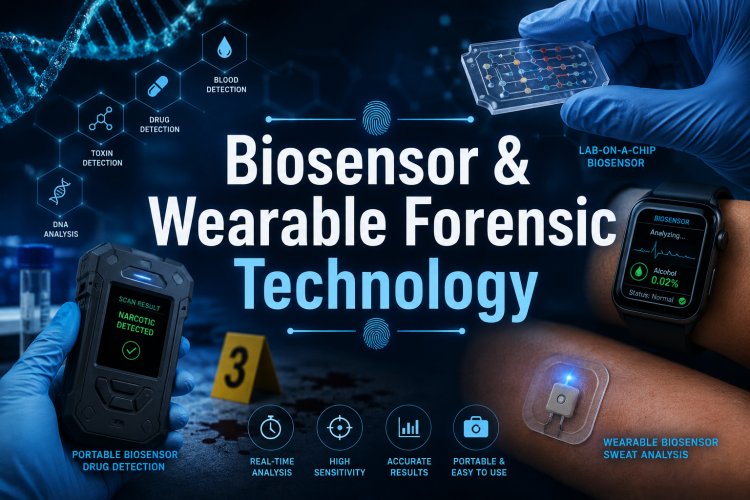
In forensic science, biosensors are used to detect evidence quickly at crime scenes without waiting for laboratory analysis.
What are Biosensors?
A biosensor is an analytical device that detects biological or chemical substances and converts them into a measurable signal.
A biosensor = Biological element + Transducer + Signal processor
Components of a Biosensor
1. Bioreceptor
- Detects the target substance
- Examples:
- Enzymes
- Antibodies
- DNA
- Cells
2. Transducer
- Converts biological reaction into electrical signal
- Types:
- Electrochemical
- Optical
- Piezoelectric
3. Signal Processor
- Amplifies and displays results
- Output:
- Digital reading
- Graph
- Alarm signal

Types of Biosensors in Forensics
1. Electrochemical Biosensors
- Measure electrical changes
- Used for:
- Drug detection
- Poison analysis
2. Optical Biosensors
- Use light signals (fluorescence, color change)
- Used in:
- DNA analysis
- Blood detection
3. Piezoelectric Biosensors
- Detect mass changes using crystals
- Useful for:
- Explosives detection
4. Thermal Biosensors
- Measure heat changes during reactions
- Used for biochemical analysis
Wearable Forensic Technology
Wearable forensic devices are portable sensors worn on the body (like watches, patches, or bands) that detect substances in real-time.
Examples:
- Smart wristbands detecting alcohol or drugs
- Sweat sensors analyzing toxins
- Skin patches detecting chemical exposure

Applications in Forensic Science
1. Crime Scene Investigation
- Detect:
- Blood
- Saliva
- Drugs
- Explosives
- On-the-spot results (real-time)
2. Toxicology
- Identify:
- Poison
- Alcohol
- Narcotics
- Even from sweat or body fluids
3. Law Enforcement
- Monitor suspects for:
- Drug use
- Alcohol levels
- Used in:
- Rehabilitation programs
- Probation monitoring
4. Postmortem Analysis
- Estimate:
- Time since death
- Chemical exposure

Microfluidics & Lab-on-a-Chip
Concept:
Miniaturized devices that perform multiple lab functions on a single chip
How it works:
- Sample enters microchannel
- Chemical reaction occurs
- Detection via sensor
- Output generated instantly
Advantages:
- Requires very small sample (microliters)
- Faster than lab testing
- Portable
Used in:
- Blood detection
- Drug screening
- DNA amplification
Advantages
Fast results (minutes instead of days)
Portable & easy to use
Requires small sample
Cost-effective in long term
Real-time monitoring possible
Latest Trends & Innovations
- Nano-biosensors (extremely sensitive detection)
- Lab-on-a-chip devices (mini forensic labs)
- AI-integrated biosensors for smart analysis
- Wireless wearable devices sending live data
Follow cyberdeepakyadav.com on
Facebook, Twitter, LinkedIn, Instagram, and YouTube
What's Your Reaction?