Ear Prints in Criminal Investigation
In forensic science, physical impressions left accidentally at the scene of crime can act as silent witnesses. The ear print is one such lesser-known but important type of evidence in science.
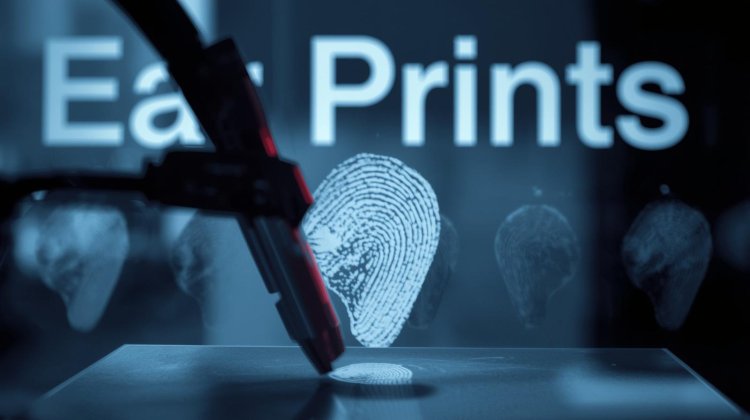
An ear print refers to the impression left by the external ear (pinna or auricle) when it comes in touch with a surface such as glass, painted doors, walls, or windows. When trying to listen for activity within a property, criminals frequently push their ears against objects, unintentionally creating ear impressions.
Ear print examination falls under the category of impression evidence, comparable to fingerprints, footprints, and lip prints.
Historical Background
-
The forensic use of ear prints was first explored in European countries, especially Netherlands, Germany, and the UK.
-
In the 1960s–70s, Dutch forensic experts began systematic research on ear morphology.
-
One of the earliest and most famous cases was the “Ear Print Case of Amsterdam”, where ear marks were successfully used to identify a burglar.
-
Later studies proved that the structure of the human ear shows individuality, making it valuable for personal identification.
Anatomy of the External Ear (Pinna)
The pinna is composed mainly of elastic cartilage covered with skin and contains several unique anatomical features.
Main anatomical parts:
-
Helix – outer curved rim of the ear
-
Antihelix – inner curved ridge
-
Scapha – groove between helix and antihelix
-
Concha – deep central hollow leading to ear canal
-
Tragus – small projection in front of ear canal
-
Antitragus – opposite to tragus
-
Lobule (ear lobe) – soft lower portion
The shape, size, depth, curvature, and relative position of these structures differ from person to person.
Formation of Ear Prints
Ear prints are formed when:
-
A person presses their ear against a surface to listen
-
Sweat, sebum, and natural skin oils transfer onto the surface
-
Pressure causes partial or complete ear impression
Common surfaces:
-
Glass windows
-
Door panels
-
Wooden or metal surfaces
-
Painted walls
-
Car windows
Types of Ear Prints
1. Visible Ear Prints
-
Clearly seen with naked eye
-
Formed due to dust, grease, or moisture
-
Rare in occurrence
2. Plastic Ear Prints
-
Formed on soft surfaces (wax, clay, putty)
-
Provide three-dimensional impression
-
Very valuable evidence
3. Latent Ear Prints
-
Invisible to naked eye
-
Most commonly encountered
-
Require development techniques like fingerprints

Detection and Development of Ear Prints
A. Visual Examination
-
Oblique lighting
-
Torch light at low angle
-
Alternate light source (ALS)
B. Powder Methods
-
Black powder
-
Magnetic powder
-
Aluminium powder
(Used carefully due to large surface area)
C. Chemical Methods
-
Ninhydrin (for porous surfaces)
-
Cyanoacrylate fuming
-
Silver nitrate (rare)
D. Photography
-
High-resolution photography
-
Scale placed near impression
-
Multiple angles
Photography is preferred before any lifting method.
Collection and Preservation
Collection Methods:
-
High-resolution digital photography
-
Gelatin lifters
-
Transparent adhesive tapes
-
Silicone casting (for plastic prints)
Preservation:
-
Store photographs in secure digital format
-
Label properly with:
-
Date
-
Time
-
Place
-
Case number
-
Examiner name
-

Examination and Comparison
Ear print comparison is done by:
Morphological Comparison
-
Shape of helix
-
Depth of concha
-
Size of tragus
-
Angle of ear projection
-
Ear lobe shape
Metric Analysis
-
Measurement of distances between anatomical landmarks
Overlay Technique
-
Crime scene print compared with suspect ear print
-
Transparent overlays or digital superimposition used
Individual Characteristics
-
Scars
-
Cuts
-
Deformities
-
Piercing marks
Ear Print as Evidence
Evidentiary Value
-
Considered supportive or corroborative evidence
-
Rarely used as sole evidence
-
Strong when combined with:
-
Fingerprints
-
DNA
-
CCTV
-
Tool marks
-
Admissibility
-
Accepted in some European courts
-
In India, still considered emerging forensic evidence
-
Requires expert testimony under Section 45 of Indian Evidence Act

Advantages of Ear Print Evidence
-
Ear structure shows individuality
-
Can link suspect to crime scene
-
Useful in burglary cases
-
Non-invasive method
-
Can be compared with suspect impressions
Difference Between Ear Print and Fingerprint
| Feature | Ear Print | Fingerprint |
|---|---|---|
| Stability | Less stable | Highly stable |
| Individuality | Moderate–High | Extremely high |
| Surface area | Large | Small |
| Distortion | High | Low |
| Legal acceptance | Limited | Universal |
Role of Ear Prints in Modern Forensics
With advancement in digital imaging, biometric analysis, and AI-based pattern recognition, ear print examination is gaining renewed importance. Research is ongoing in:
-
3D ear scanning
-
Automated ear recognition systems
-
Integration with biometric databases
Limitations of Ear Print Evidence
-
Ear is flexible → shape changes under pressure
-
Distortion due to angle and surface
-
Partial prints are common
-
Environmental effects (heat, dust, wiping)
-
Limited databases
-
Not as reliable as fingerprints
Follow cyberdeepakyadav.com on
Facebook, Twitter, LinkedIn, Instagram, and YouTube
What's Your Reaction?