Psychological Manipulation in Cybercrime
Psychological manipulation in cybercrime refers to the use of human emotions, behavior, and cognitive biases by attackers to trick victims into revealing sensitive information, transferring money, or granting access to systems.
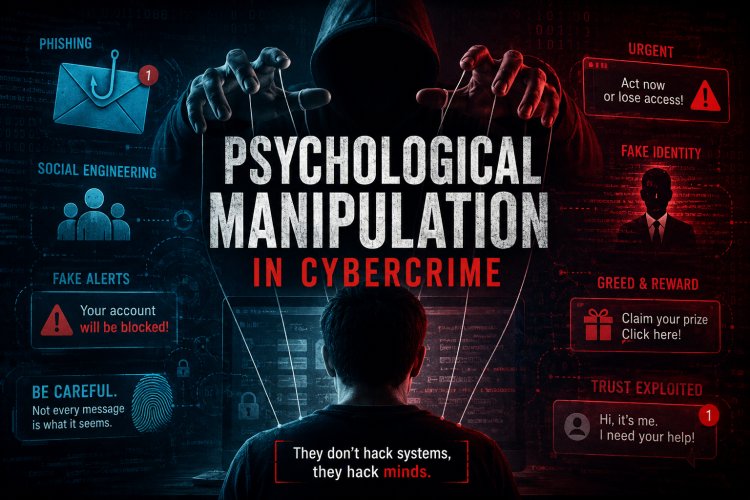
Instead of hacking systems directly, attackers hack the human mind — this is also called social engineering.
1. Fear & Panic
- Messages like: “Your account will be blocked!”
- Victims act quickly without thinking
2. Urgency
- “Act now or lose access”
- Reduces logical decision-making
3. Authority
- Impersonating police, bank officials, or government agencies
- People tend to obey authority figures
4. Greed / Reward
- Lottery scams, job offers, crypto gains
- Exploits desire for quick money
5. Trust & Familiarity
- Fake messages from friends, colleagues
- Compromised accounts used to trick contacts
6. Curiosity
- “Check who viewed your profile”
- Malicious links hidden behind curiosity

Types of Psychological Cyber Attacks
1. Phishing
- Fake emails/SMS/websites to steal credentials
- Most common attack using fear + urgency
2. Spear Phishing
- Targeted attack using personal information
- Highly convincing
3. Pretexting
- Creating a fake story (e.g., “I am from IT support”)
- Used to gain trust
4. Business Email Compromise (BEC)
- CEO/manager impersonation
- Requests urgent money transfer
5. Deepfake Scams
- AI-generated voice/video
- Used to impersonate real people
6. Baiting & Quid Pro Quo
- Offering something in return (free software, USB drives)

Psychological Principles Behind These Attacks
1. Cognitive Bias Exploitation
- Confirmation Bias → People believe what matches their expectations
- Authority Bias → Trust in authority figures
- Scarcity Bias → “Limited time offer” increases value
2. Emotional Hijacking
- Strong emotions override rational thin
- king
- Fear, excitement, or stress = poor decisions
3. Habitual Behavior
- People click links or download files without verifying
Real-World Examples
- CEO Fraud Case: Employee transfers money after fake urgent email from CEO
- Deepfake Voice Scam: Criminal mimics boss voice asking for funds
- OTP Scam (India): Fraudsters pretend to be bank officials

Role in Cyber Forensics
As a Cyber Forensic Expert, this area is very important
Evidence Collection
- Email headers analysis
- Call logs, chat records
- Phishing URLs
Behavioral Analysis
- Understanding attacker strategy
- Victim response patterns
Tools Used
- Email forensic tools (e.g., header analyzers)
- OSINT tools
- Log analysis tools
Prevention & Awareness

For Individuals
- Never click unknown links
- Verify before trusting
- Enable Multi-Factor Authentication (MFA)
For Organizations
- Conduct phishing awareness training
- Implement Zero Trust Security
- Use email filtering & AI detection
Golden Rule
“Think Before You Click”
Follow cyberdeepakyadav.com on
Facebook, Twitter, LinkedIn, Instagram, and YouTube
What's Your Reaction?