International Cyber Fraud Network Busted: ₹50 Crore Scam Targeting US Citizens Exposed
The Police Commissionerate has uncovered a major international cyber fraud racket involving illegal call centres and multi-stage financial scams. The network targeted US citizens through fake loan and credit score schemes, defrauding over ₹50 crore in two years. The operation highlights the growing sophistication of cybercrime and the misuse of digital platforms for financial fraud.
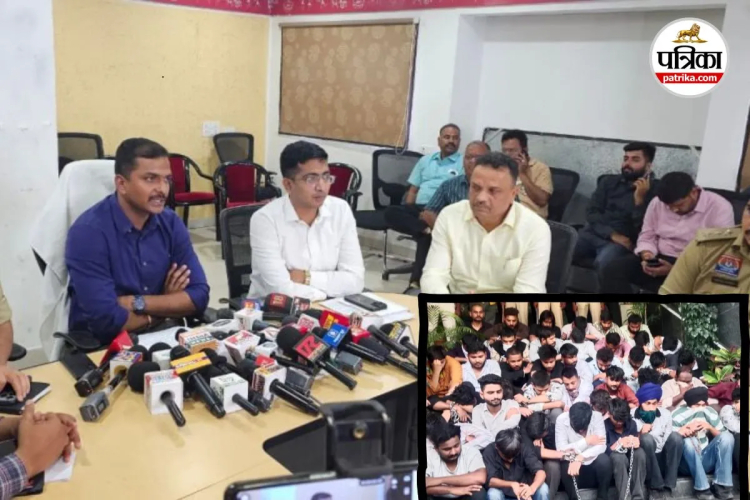
International Cyber Fraud Network Busted by Police
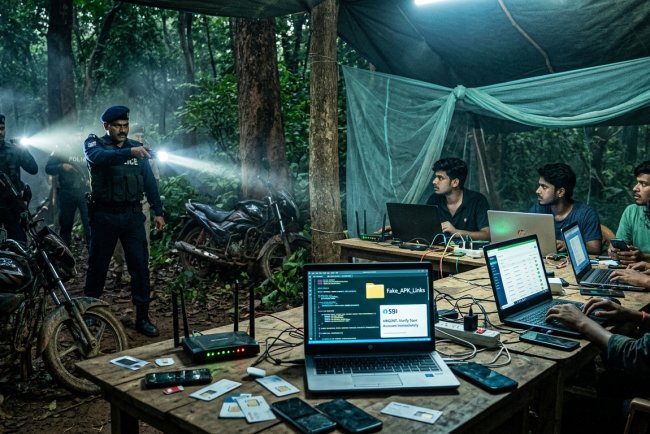
The Police Commissionerate in the capital has successfully dismantled a large-scale international cyber fraud network. Acting on intelligence inputs, authorities conducted simultaneous raids on three illegal call centres, resulting in the arrest of 42 individuals. During the operation, officials seized 67 mobile phones, 18 laptops, 28 desktop computers, and three Wi-Fi routers.
Preliminary investigations revealed that the syndicate primarily targeted citizens of the United States. The accused defrauded victims by posing as financial service providers offering loan assistance and credit score (CIBIL) improvement services. Over the past two years, the network is estimated to have siphoned off more than ₹50 crore.
Modus Operandi of the Fraud Network
The fraud operation was executed through a well-structured five-stage process:
1. Data Collection and Target Identification
The group initially procured personal data of foreign nationals, particularly individuals who had applied for loans. This information was sourced through social media platforms, online databases, and email groups. Call centre operatives then contacted potential victims using internet-based calling systems, following scripted conversations to establish credibility.
2. Misrepresentation of Credit Scores
Victims were falsely informed that their credit scores were inadequate, leading to loan rejection. The fraudsters then offered to improve these scores, during which they extracted sensitive personal and banking information.
3. Use of Fake Financial Instruments
To gain the victims’ trust, the technical team temporarily credited small amounts (e.g., $100) into victims’ accounts using cloned cheques. Exploiting banking processing delays, the amount would appear legitimate for a short duration. Investigations suggest the involvement of foreign networks, particularly with links to China, in facilitating these technical manipulations.
4. Inducement for Payment
Once trust was established, victims were informed that the credited amount was a test transaction and needed to be returned. They were then instructed to make payments through gift cards, a method chosen for its low traceability.
5. Conversion and Transfer of Funds
The fraudsters quickly converted the gift card codes into cash, which was subsequently routed to India through hawala channels and delivered to the mastermind of the operation.
Use of Intimidation Tactics
In several instances, the accused resorted to coercion by sending fake legal notices and fabricated arrest warrants. Victims were threatened with legal consequences for non-compliance, compelling many to make immediate payments under pressure.
Interstate and International Links
Although the network operated from the capital, its kingpin was based in Gujarat, with technical assistance originating from abroad. The operation involved individuals from multiple states, including Gujarat, Uttar Pradesh, Bihar, Rajasthan, Meghalaya, Haryana, and Punjab. Each call centre was managed by separate supervisors, indicating a highly organised structure.
The crackdown, carried out on March 25 based on confidential intelligence, exposed a sophisticated and well-coordinated international cybercrime syndicate.
Follow cyberdeepakyadav.com on
Facebook, Twitter, LinkedIn, Instagram, and YouTube
What's Your Reaction?