Bishnu Paudel Arrested in Nepal: Money Laundering Investigation Sparks Political Debate and Accountability Questions
Nepal's former Finance Minister and CPN-UML Vice-Chair Bishnu Paudel has been arrested in connection with a money laundering investigation. Explore the political implications, accountability concerns, legal developments, and impact on Nepal's governance.
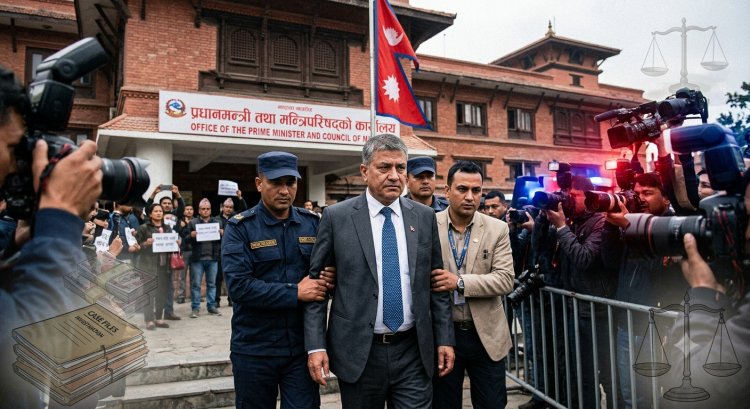
Arrest of Bishnu Paudel Raises Questions on Accountability and Governance in Nepal
Executive Summary
Nepal's political landscape witnessed a significant development following the arrest of Bishnu Paudel, one of the country's most influential political figures. Paudel was detained by authorities in connection with an ongoing money laundering investigation, triggering widespread political debate and raising concerns regarding transparency, accountability, and the rule of law.
The arrest is particularly notable because of Paudel's long-standing role in shaping Nepal's economic policies and his senior position within the ruling CPN-UML party. While authorities have confirmed the existence of an investigation, details regarding the allegations, evidence, and legal basis of the case remain undisclosed.
Key Developments
Arrest and Investigation
According to government authorities, the Department of Money Laundering Investigation issued an arrest warrant leading to Paudel's detention in Surkhet district while attending a party organizational program.
Officials have indicated that the investigation had been ongoing for some time before the warrant was executed. However, no official documentation outlining the charges has yet been released to the public.
Transfer and Legal Proceedings
Following his arrest, Paudel was initially held in Surkhet before being transferred to Nepalgunj. Authorities are reportedly preparing to move him to Kathmandu, where formal questioning and further legal procedures are expected to occur.
The high level of coordination surrounding his transfer highlights the sensitivity and national significance of the case.
Political Significance
Paudel's influence extends beyond party politics. During multiple terms as Finance Minister, he played a central role in:
- National budget formulation
- Infrastructure financing
- Economic policy development
- Public investment planning
- Fiscal management reforms
His arrest therefore carries implications not only for the ruling party but also for Nepal's broader governance framework.
Stakeholder Reactions
Opposition Parties
Opposition leaders are expected to demand greater transparency and public disclosure regarding the allegations and supporting evidence.
CPN-UML Leadership
Party representatives have urged restraint, emphasizing that conclusions should not be drawn before the completion of legal and judicial proceedings.
Legal Community
Legal experts have stressed the importance of due process and institutional transparency, arguing that public trust depends on clear communication regarding the investigation's legal foundation.
Major Issues Raised by the Case
1. Financial Accountability
The case places renewed focus on financial oversight and anti-money laundering enforcement mechanisms within Nepal.
2. Rule of Law
The arrest tests whether legal institutions can investigate senior political figures without political interference.
3. Public Trust
Transparency in handling the investigation will be crucial in maintaining confidence in state institutions.
4. Political Stability
Depending on future developments, the case could affect the ruling coalition's political standing and public perception.
Risk Assessment Chart
Critical Assessment
Strengths of the Case Handling So Far
- Legal procedures appear to have been formally initiated.
- Authorities acted through an investigative department rather than political channels.
- Judicial review is expected to follow the arrest.
Areas of Concern
- Lack of publicly available evidence.
- Absence of detailed charges.
- Limited official communication.
- Potential for political polarization and speculation.
Conclusion
The arrest of Bishnu Paudel represents one of Nepal's most consequential political investigations in recent years. While the development may strengthen perceptions of accountability if handled transparently, the absence of publicly disclosed evidence has created uncertainty and speculation.
The credibility of the investigation will ultimately depend on the authorities' ability to demonstrate due process, provide clear legal justification, and ensure transparency throughout the judicial process. Until further information emerges, the case remains a critical test of Nepal's institutional integrity, anti-corruption framework, and commitment to the rule of law.
Follow cyberdeepakyadav.com on
Facebook, Twitter, LinkedIn, Instagram, and YouTube
What's Your Reaction?