Understanding Biometrics: The Future of Personal Identification
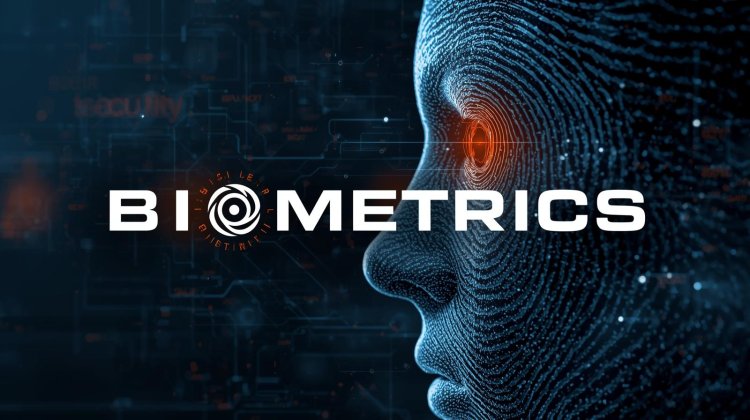
The measuring and statistical analysis of an individual's distinct physical and behavioral traits is known as biometrics. It is frequently employed for access control and identification, as well as for identifying those who are being watched.
What is Biometrics?
Biometrics refers to the measurement and analysis of people's unique physical and behavioral characteristics, typically used for identification or access control.
Common types include:
-
Fingerprint recognition
-
Facial recognition
-
Iris/retina scanning
-
Voice recognition
-
Gait analysis
-
Behavioral patterns (e.g., typing rhythm)
Biometric systems rely on unique traits that are difficult to forge or steal. These traits fall into two main categories:
1. Physiological Characteristics
These are biological traits of a person — physical features that are inherent and typically unchanging.
Examples
| Trait | Description |
|---|---|
| Fingerprint | Unique patterns of ridges on fingertips. |
| Face | Structure of facial features (eyes, nose, mouth, etc.). |
| Iris | Colored ring around the pupil; highly unique pattern. |
| Retina | Pattern of blood vessels at the back of the eye. |
| Hand geometry | Shape, size, and structure of the hand and fingers. |
| DNA | Genetic makeup — the most unique identifier. |
These are generally stable over time and difficult to change or fake.
2. Behavioral Characteristics
These are related to how a person acts or behaves. They're learned and can change slightly over time.
Examples
| Trait | Description |
|---|---|
| Voice | Tone, pitch, and rhythm of speech. |
| Signature | The way a person signs their name — including pressure and speed. |
| Typing rhythm | How a person types — speed, pauses, key pressure. |
| Gait | The way someone walks or runs. |
| Mouse movement | Patterns in how a person uses a mouse or other input device. |

These can vary due to mood, health, or environment — so they may be less consistent than physiological traits.
Fingerprint Live Scanning System
A biometric tool called a Fingerprint Live Scanning System is used to take, process, and save fingerprint images in real time for identification or verification. Live scanning is digital, quick, and more accurate than fingerprinting done by hand.
What Is Live Fingerprint Scanning?
It is a technique for digitally taking fingerprints without the need for ink. The technology immediately records the ridge patterns and minute details (such as bifurcations and ridge endings) from the living skin when the finger is put on a sensor or scanning surface.
Components of a Live Fingerprint Scanning System
| Component | Description |
|---|---|
| Scanner/Sensor | Captures the fingerprint image. Can be optical, capacitive, or ultrasonic. |
| Processing Unit | Enhances and extracts features from the scanned image. |
| Matching Engine | Compares the scanned fingerprint to a stored template. |
| Database | Stores fingerprint templates for comparison. |
| User Interface | Displays scan results, status, etc. Can be a PC or embedded display. |
Types of Fingerprint Sensors
| Type | How it Works | Notes |
|---|---|---|
| Optical | Uses light to capture fingerprint image. | Common and inexpensive, but easier to spoof. |
| Capacitive | Detects electrical signals from finger ridges/valleys. | More secure and compact. |
| Ultrasonic | Uses sound waves to map fingerprint. | High accuracy, even with dirty or wet fingers. |
How It Works – Step by Step
-
Finger Placement: The user places their finger on the scanner.
-
Image Capture: A high-resolution image of the fingerprint is captured.
-
Feature Extraction: The system analyzes minutiae points (e.g., ridge endings).
-
Template Creation: A digital fingerprint template is created (not the image itself).
-
Matching: The system compares the live scan with stored templates.
-
Result: Access granted/denied or identity confirmed/not confirmed.

Applications of Live Fingerprint Scanners
| Field | Use Case |
|---|---|
| Government | Passport, national ID, voter registration (e.g., Aadhaar in India). |
| Law Enforcement | Criminal identification, background checks. |
| Banking & Finance | ATM access, secure banking, KYC. |
| Workplaces | Employee attendance and access control. |
| Mobile Devices | Phone unlocking, app security (e.g., Touch ID). |
What Is the Iris?
Your eye's iris is the colorful ring that surrounds the pupil. These patterns, which include rings, freckles, furrows, and ridges, are specific to each individual, including identical twins. stable throughout life (rarely varies beyond one year of age). hard to duplicate or change.
How Iris Recognition Works
Capture a Picture
The iris is photographed by a high-resolution camera, usually with infrared (IR) light to minimize reflections and make patterns visible.
Divided into
By eliminating the pupil, eyelid, and eyelash components, the method separates the iris from the rest of the eye.
Features Extraction
The iris's distinct texture and pattern are recognized by the system and encoded into a digital template.
Matching
Mathematical techniques are used to compare the captured template with a database that is saved.
Making a choice
Verification (1:1): Verifies identity (e.g., is this person actually John Doe?).
Identification (1:N): Locates the individual inside a sizable database.
Iris Scanner System Components
| Component | Role |
|---|---|
| Camera (IR-based) | Captures detailed image of the iris. |
| Image Processor | Enhances, segments, and extracts iris features. |
| Template Generator | Creates a unique digital code of the iris. |
| Matcher | Compares templates for identification or verification. |
| Database | Stores iris templates. |

Iris vs. Other Biometrics
| Feature | Fingerprint | Face Recognition | Iris Recognition |
|---|---|---|---|
| Accuracy | High | Moderate to High | Very High |
| Speed | Fast | Very Fast | Fast |
| Contact | Touch-based | Contactless | Contactless |
| Stability | Medium | Medium | Very Stable |
| Spoofing Risk | Medium | High | Low |
Use of Biometrics in Civil Work
In civil applications, biometrics has become an essential instrument that helps enterprises and governments provide citizens with safe, effective, and transparent services. Through the use of distinctive biological characteristics (such as fingerprints, iris, or face), biometrics guarantees precise identity verification and lowers fraud in public systems.
Key Uses of Biometrics in Civil Work
1. National Identification Systems
-
Purpose: Provide each citizen with a unique, secure identity.
-
Example: India’s Aadhaar program uses fingerprint, iris, and face biometrics.
-
Benefits
-
Prevents duplicate/fake IDs.
-
Facilitates e-governance and digital services.
-
Enables paperless KYC (Know Your Customer) for banks, SIM cards, etc.
-
2. Voter Registration and Election Integrity
-
Use: Biometric voter ID cards and verification during voting.
-
Countries using it: Ghana, Kenya, Nigeria, India, etc.
-
Benefits
-
Prevents double voting.
-
Reduces voter fraud and impersonation.
-
Ensures clean and fair elections.
-
3. Social Welfare and Subsidy Distribution
-
Use: Identify eligible citizens for subsidies, pensions, or welfare schemes.
-
Example: Biometric authentication for receiving food rations, cash transfers, or pension payouts.
-
Benefits
-
Prevents ghost beneficiaries.
-
Ensures direct benefit transfer (DBT) to the right person.
-
Saves government funds through leakage reduction.
-
4. Border and Immigration Control
-
Use: Biometric passports, e-visas, and border checks.
-
Examples: EU’s Entry/Exit System, US-VISIT program.
-
Benefits
-
Enhances national security.
-
Speeds up immigration checks.
-
Prevents illegal entry and identity fraud.
-
5. Civil Servant and Government Employee Management
-
Use: Attendance systems and ID verification for public sector workers.
-
Benefits
-
Prevents proxy attendance or “ghost workers.”
-
Ensures workforce accountability.
-
Reduces salary fraud.
-
6. Healthcare and Medical Records
-
Use: Biometric patient ID for accessing health records, insurance, and treatment.
-
Benefits
-
Prevents duplicate or stolen health identities.
-
Speeds up emergency treatment with verified info.
-
Ensures targeted delivery of health schemes.
-
7. Law Enforcement and Criminal Identification
-
Use: Fingerprint/face recognition in criminal databases (like AFIS – Automated Fingerprint Identification System).
-
Benefits
-
Helps track criminals and solve cases.
-
Prevents wrongful arrests.
-
Improves investigative speed and accuracy.
-

Everyday Applications of Biometrics
1. Smartphones & Devices
-
Fingerprint/Face Unlock (e.g., Apple Face ID, Android fingerprint sensors)
-
Voice assistants identifying users (e.g., Alexa, Google Assistant)
2. Banking & Payments
-
Biometric login for mobile banking apps
-
Fingerprint or facial recognition for payment authentication (e.g., Apple Pay, Samsung Pay)
3. Travel & Transportation
-
ePassports and biometric border checks (e.g., facial recognition at airports)
-
Biometric boarding in airlines (paperless travel)
4. Healthcare
-
Patient identification via fingerprints or iris scans
-
Biometric logins for doctors and staff
-
Fitness trackers using biometrics (e.g., heart rate, step patterns)
5. Workplaces
-
Biometric attendance systems (fingerprint, face recognition)
-
Secure access to physical or digital spaces
6. Retail
-
Personalized customer service based on facial recognition (in some smart stores)
-
Biometric payment systems (e.g., Amazon One – pay by palm)
7. Education
-
Exam proctoring using facial recognition
-
Biometric attendance for students
Follow cyberdeepakyadav.com on
Facebook, Twitter, LinkedIn, Instagram, and YouTube
What's Your Reaction?