Meerut Cyber Crime Case Study: ₹2.5 Crore Property Attached in Major Cyber Fraud Crackdown
The Meerut cybercrime case highlights a significant law enforcement action in which properties worth nearly ₹2.5 crore were attached after investigators alleged they were purchased using proceeds from cyber fraud. This article examines the investigation, legal provisions under the Gangster Act, asset tracing techniques, financial forensics, and the importance of targeting criminal wealth in combating organized cybercrime. It also discusses how modern cyber investigations combine digital forensics, financial intelligence, and legal procedures to dismantle cybercriminal networks.
Cybercrime Crackdown in Meerut: ₹2.5 Crore Illegal Assets Attached in Major
Action Against Online Fraud
Introduction
What started as online clicks behind computer and mobile screens ultimately led to a large-scale police operation on the streets of Meerut. In a significant move against organized cybercrime, the police attached properties worth nearly ₹2.5 crore that were allegedly purchased using money earned through cyber fraud and online financial scams. This action demonstrates that digital crimes no longer remain confined to cyberspace—law enforcement agencies are increasingly focusing on recovering the proceeds of crime by targeting the financial assets of cybercriminals.
Background of the Case
According to the investigation, the accused, Alauddin, allegedly generated substantial illegal income through various online financial frauds. Instead of keeping the money in bank accounts, investigators believe he invested the proceeds in real estate, purchasing several plots and constructing a residential house in Meerut.
Police officials stated that the properties were acquired entirely through money obtained from cybercrime, making them liable for attachment under applicable laws.
Properties Attached
Authorities attached the following assets under Section 14(1) of the Uttar Pradesh Gangsters and Anti-Social Activities (Prevention) Act:
| Property | Location |
|---|---|
| Four Residential Plots | Bajot Village |
| One Residential Plot | Meerut |
| One Pucca House | Meerut Residency Colony |
Estimated Value
-
Circle Rate Value: ₹98.04 Lakh
-
Estimated Market Value: Approximately ₹2.50 Crore

Legal Action Taken
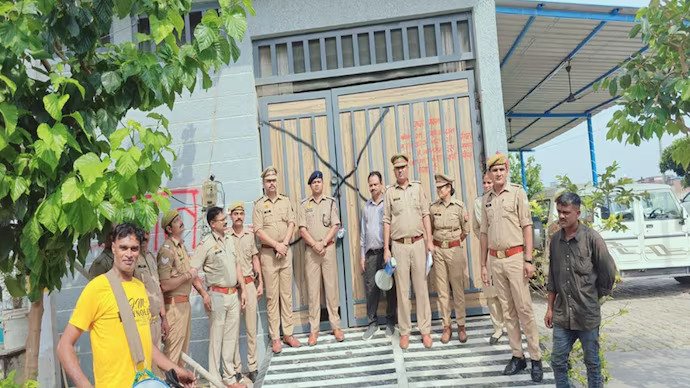
The attachment was carried out under Section 14(1) of the Gangster Act, which empowers authorities to seize or attach assets believed to have been acquired through criminal activities.
Before sealing the properties, officials followed the prescribed legal procedure by:
-
Conducting a public proclamation (drum-beating announcement)
-
Pasting attachment notices
-
Sealing the properties
-
Recording the attachment in the presence of revenue officials
This transparent process ensures compliance with legal requirements.
Criminal Background of the Accused
According to police records, Alauddin is allegedly involved in seven criminal cases registered across:
-
Meerut
-
Ayodhya
-
Rajasthan
The cases reportedly include:
-
Cyber Fraud
-
Online Financial Fraud
-
Cheating
-
Offences under the Information Technology Act
-
Gangster Act Violations
Cybersecurity Perspective
This case highlights an important evolution in cybercrime investigations. Modern investigations do not stop at identifying the offender; they also focus on following the money.
Key Cybersecurity Concepts
1. Financial Investigation
Investigators attempt to trace where the stolen money was transferred and how it was ultimately spent.
2. Asset Tracing
Illegal earnings are tracked to identify investments made in:
-
Land
-
Houses
-
Vehicles
-
Businesses
-
Bank Accounts
3. Asset Recovery
Instead of merely arresting offenders, authorities recover the financial benefits obtained through cybercrime.
4. Crime Deterrence
When criminals lose both their freedom and illegally acquired wealth, cybercrime becomes significantly less profitable.
Importance of Property Attachment
Attaching criminal assets serves several important purposes:
✔ Removes the financial motivation behind cybercrime.
✔ Prevents criminals from enjoying illegal wealth.
✔ Sends a strong deterrent message to organized cybercrime groups.
✔ Strengthens public confidence in law enforcement.
✔ Helps dismantle the economic backbone of cybercriminal networks.
Challenges Not Covered in the Case
Although the enforcement action is significant, several important investigation details are missing:
-
Type of cyber fraud committed
-
Number of victims
-
Total financial loss
-
Digital forensic evidence collected
-
Money laundering techniques used
-
Use of mule bank accounts
-
Role of cryptocurrency (if any)
-
Timeline of the investigation
Including these aspects would provide a more comprehensive understanding of the investigation.
Lessons for Cybercrime Investigators
This case demonstrates that successful cybercrime investigations require more than technical expertise. Investigators must combine:
-
Digital Forensics
-
Financial Forensics
-
Cyber Intelligence
-
Banking Analysis
-
Legal Procedures
-
Inter-agency Coordination
The integration of these disciplines enables authorities to identify offenders, trace illicit financial flows, and recover assets obtained through cyber-enabled crimes.
Conclusion
The Meerut property attachment case illustrates a growing shift in India's cybercrime enforcement strategy—from merely arresting offenders to disrupting their financial infrastructure. By attaching assets allegedly acquired through cyber fraud, law enforcement agencies demonstrate that digital criminals cannot safely convert stolen funds into real-world wealth.
This case reinforces a critical principle in modern cybercrime investigations: the most effective way to combat organized cybercrime is not only to catch the offender but also to deprive them of the profits generated through illegal activities.
Follow cyberdeepakyadav.com on
Facebook, Twitter, LinkedIn, Instagram, and YouTube
What's Your Reaction?