Drone Forensics: Tracking the Digital Flight Path
Drone and Autonomous System Forensics is a branch of digital forensics that focuses on collecting, analyzing, and preserving digital evidence from drones (UAVs) and autonomous systems such as self-driving vehicles, delivery robots, and unmanned aircraft. These systems generate large amounts of digital data (flight logs, GPS coordinates, sensor data, images, and communication records) which can be used as evidence in investigations involving crimes, accidents, or security incidents
What are Drones and Autonomous Systems?
Drone (UAV – Unmanned Aerial Vehicle)
A drone is an aircraft without a human pilot onboard, controlled either remotely or autonomously using software and sensors.
Common uses:
-
Aerial photography and videography
-
Military surveillance
-
Agriculture monitoring
-
Package delivery
-
Disaster response
Autonomous Systems
These are machines that operate with minimal human intervention using AI, sensors, and algorithms.
Examples:
-
Self-driving cars
-
Autonomous delivery robots
-
Military drones
-
Agricultural drones
-
Warehouse robots
What is Drone Forensics?
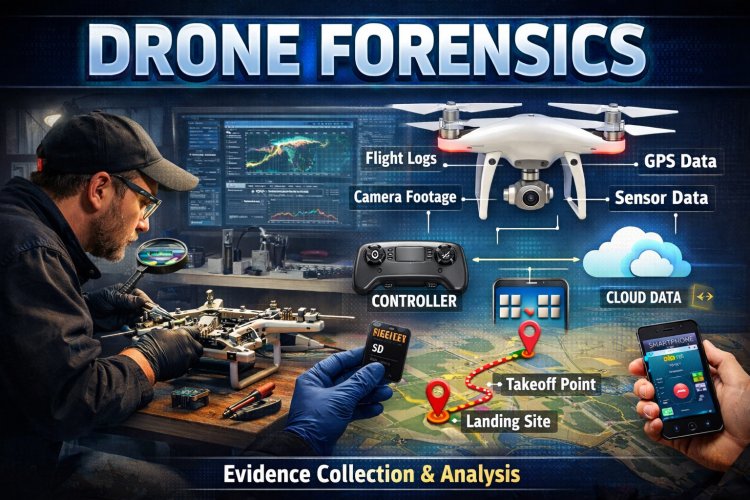
Drone forensics involves investigating drones after an incident to recover digital evidence.
Investigators analyze:
-
Flight logs
-
GPS location data
-
Camera recordings
-
Communication between drone and controller
-
Sensor data
-
Memory cards and internal storage
This helps determine:
-
Who controlled the drone
-
Where the drone flew
-
What the drone recorded
-
Whether it was used in illegal activity

Why Drone Forensics is Important
Drone forensics is important because drones are increasingly used in criminal and malicious activities.
Examples of drone crimes:
-
Smuggling drugs into prisons
-
Unauthorized surveillance
-
Terrorism and spying
-
Illegal border crossing monitoring
-
Privacy violations
-
Delivering contraband items
Drone forensics helps law enforcement trace the operator and reconstruct events.
Types of Evidence in Drone Forensics
1. Flight Logs
Flight logs record all drone activities.
They contain:
-
Take-off and landing times
-
Altitude
-
Speed
-
GPS coordinates
-
Battery status
-
Flight path
These logs help investigators reconstruct the drone's entire flight path.
2. GPS Data
Drones store precise GPS coordinates.
Investigators can determine:
-
Launch location
-
Flight route
-
Destination location
-
Landing site
3. Camera and Media Files
Many drones have high-resolution cameras.
Evidence includes:
-
Photos
-
Videos
-
Timestamp data
-
Location metadata
This data may reveal the target of surveillance or criminal activity.
4. Controller Data
The remote controller also stores data such as:
-
Device ID
-
Control commands
-
User account information
-
Communication logs
5. Sensor Data
Drones use multiple sensors:
-
Gyroscope
-
Accelerometer
-
Magnetometer
-
Barometer
-
Obstacle sensors
These help investigators analyze drone movements and environmental conditions.
Drone Forensic Investigation Process
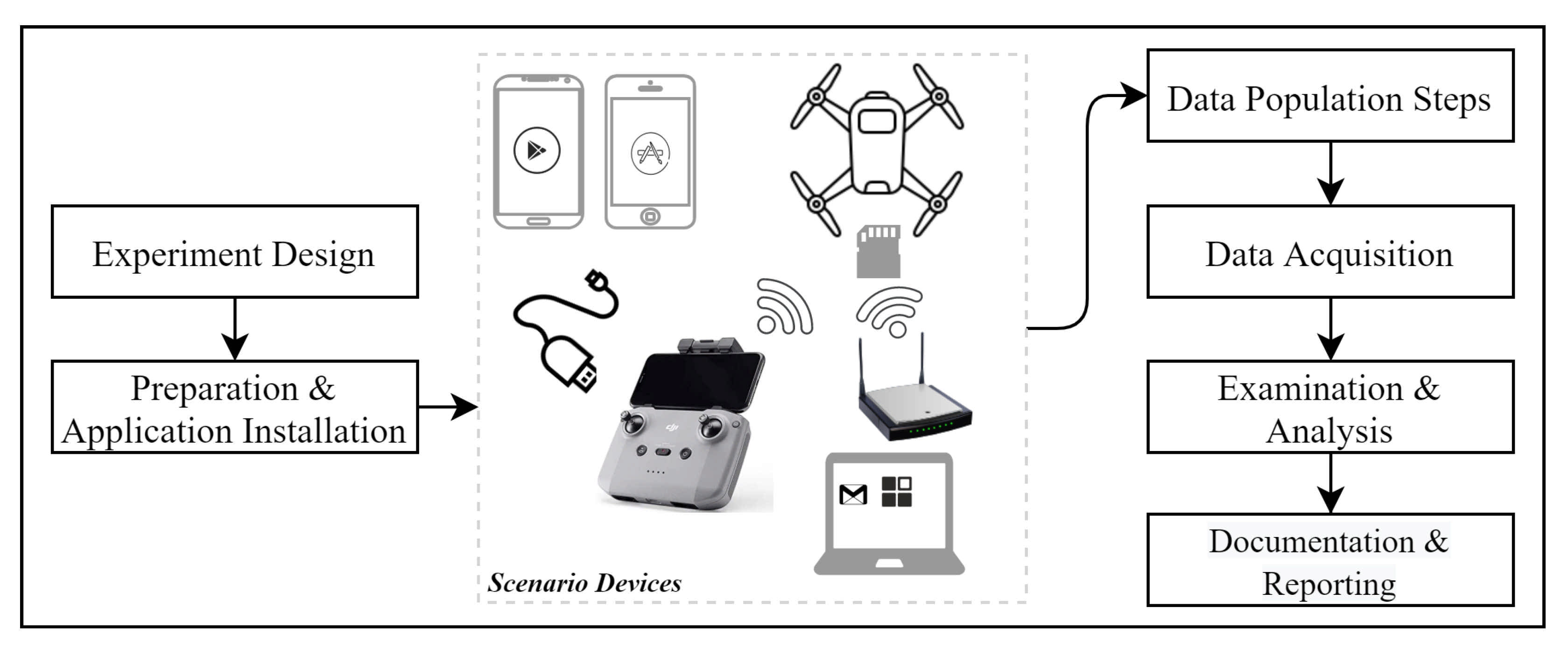
The forensic process usually follows these steps:
Step 1: Identification
Identify the drone model, manufacturer, and hardware components.
Example:
-
Drone body
-
Controller
-
SD card
-
Battery
Step 2: Evidence Preservation
Evidence must be preserved to maintain integrity.
Actions include:
-
Photographing the device
-
Isolating wireless connections
-
Using write blockers
-
Maintaining chain of custody
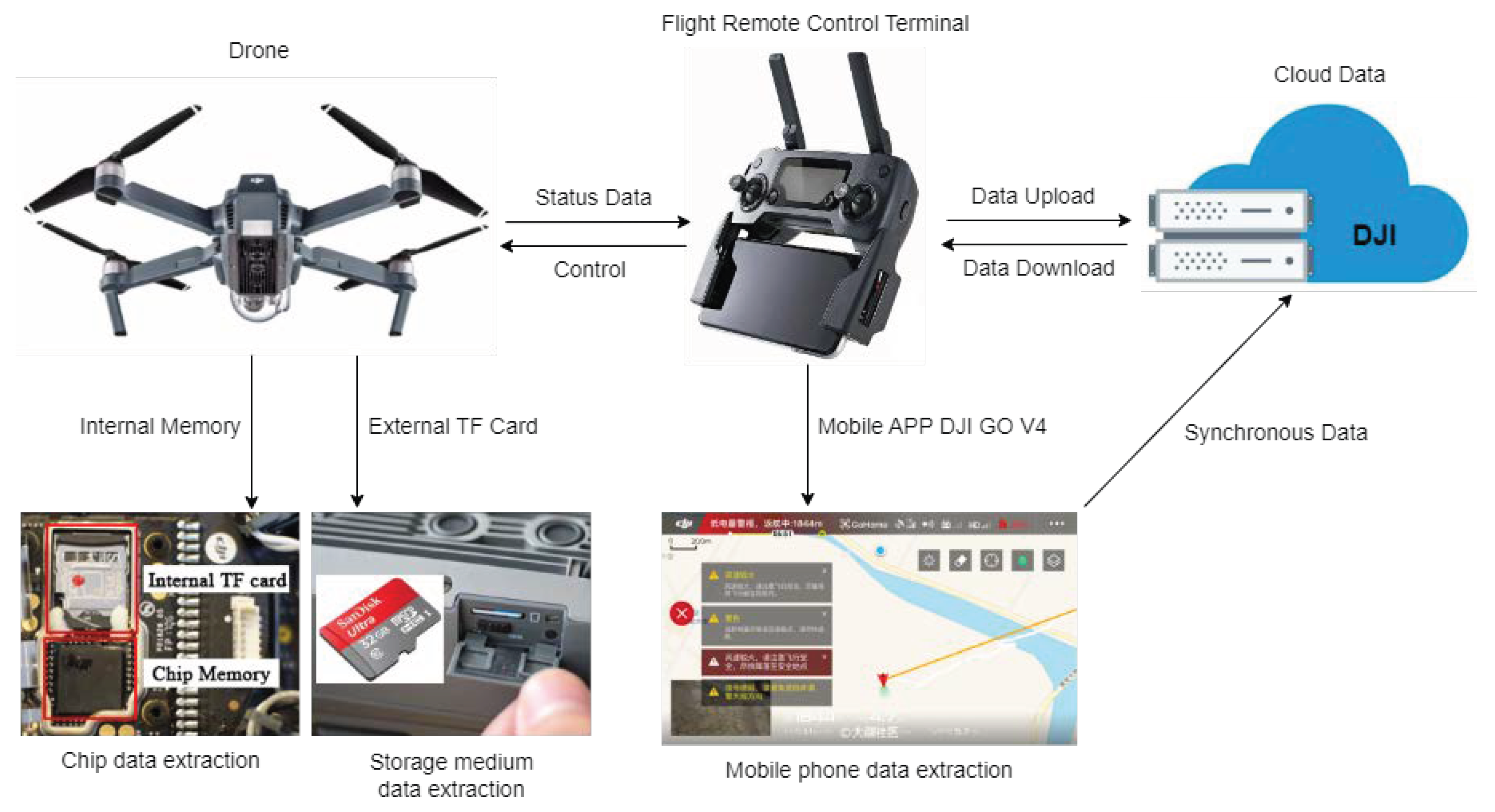
Step 3: Data Acquisition
Investigators extract data from:
-
Drone internal memory
-
SD cards
-
Remote controller
-
Mobile apps
-
Cloud accounts
Step 4: Data Analysis
Analyze recovered data to determine:
-
Flight history
-
Operator identity
-
Mission objective
-
Illegal activities
Step 5: Reporting
A forensic report is created including:
-
Evidence collected
-
Analysis methods
-
Findings
-
Timeline of events
Tools Used in Drone Forensics
Common forensic tools include:
| Tool | Purpose |
|---|---|
| Autopsy | Digital evidence analysis |
| Cellebrite | Mobile and controller data extraction |
| DatCon | DJI drone log analysis |
| Airdata UAV | Drone flight data analysis |
| Wireshark | Network communication analysis |
These tools help investigators decode proprietary drone log files.
Challenges in Drone Forensics
1. Proprietary File Formats
Many drone manufacturers use encrypted or proprietary log formats.
2. Data Volatility
Drone data may be lost due to:
-
Crashes
-
Battery failure
-
Storage damage
3. Encryption
Some drones encrypt data making forensic extraction difficult.
4. Lack of Standard Procedures
Drone forensic investigation does not yet have universal standards.
5. Rapid Technology Changes
New drone models appear frequently, requiring updated forensic methods.
Real-World Applications of Drone Forensics
Drone forensics is used in many fields:
Law Enforcement
Investigating illegal surveillance, smuggling, and criminal activities.
Military
Analyzing captured enemy drones.
Accident Investigation
Studying drone crashes.
Border Security
Tracking drones used for smuggling.
Privacy Protection
Investigating illegal aerial spying.
Follow cyberdeepakyadav.com on
Facebook, Twitter, LinkedIn, Instagram, and YouTube
What's Your Reaction?