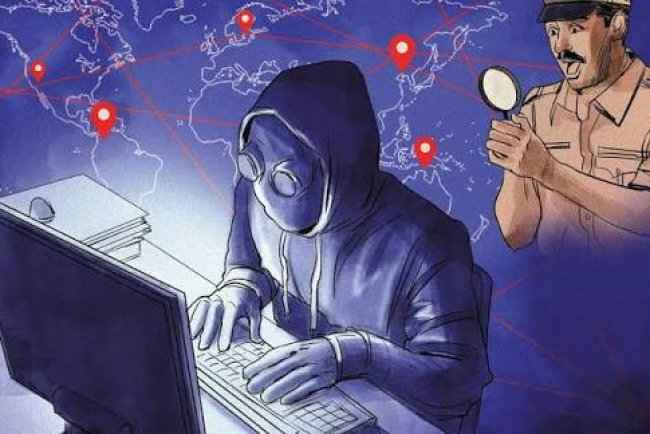
Karnataka CCU Busts Bengaluru-Based Tech Support Scam Targeting U.S. Users
Karnataka’s Cyber Command Unit has uncovered a Bengaluru-based fake tech-support centre that allegedly targeted hundreds of U.S. victims through system-locking malware and impersonation scams. Investigations reveal a well-organised operation hidden behind a corporate façade.

Karnataka Cyber Command Unit Exposes Sophisticated Tech-Support Fraud Targeting U.S. Citizens
BENGALURU:
Karnataka authorities have uncovered a sophisticated cyber-fraud operation that posed as a legitimate tech-support centre, evolving quietly into a multimillion-rupee racket targeting victims in the United States. A weeks-long investigation by the state’s newly established Cyber Command Unit (CCU) has revealed the scale, structure, and methods of the fraudulent enterprise.
A Suo Motu Case that Triggered the Raid
The CCU initiated its first major enforcement action after detecting unusual digital activity supported by specific intelligence inputs. Acting on this, police filed a suo motu case under relevant provisions of the Information Technology Act.
A team led by Savitha Srinivas, Superintendent of Police, Special Cyber Cell, launched a raid from 9 p.m. Friday to 11 a.m. Saturday, operating with urgency and precision.
At first glance, the office — located on the sixth floor of the Delta Building, Sigma Soft Tech Park — resembled a regular tech-services unit. However, closer examination of systems and devices revealed that the company, registered as Musk Communications, had been running a large-scale cyber fraud targeting American users.
The firm had reportedly been operational since August.
All electronic devices from the premises have been seized for forensic analysis.
Inside a Four-Layered Fraud Model
Investigators described the fraud model as simple on the surface but technically advanced in execution.
1. Targeted Facebook Ads
Scammers ran highly targeted Facebook advertisement campaigns aimed at U.S. users, embedding malicious code within what appeared to be genuine service links or security alerts.
2. System Freeze & Fake Pop-Ups
Once clicked, the code triggered a system freeze or lock, displaying a full-screen alert mimicking “Microsoft Global Technical Support.”
A helpline number connected victims directly to the Bengaluru-based call centre.
3. Impersonation Script
Call-centre agents, trained meticulously, impersonated:
-
Microsoft support staff, and
-
Officials from the U.S. Federal Trade Commission (FTC)
They convinced victims that their IP address, device security, and banking data were compromised.
4. Financial Extraction
Victims were pressured to pay for fake compliance fixes, security patches, and emergency risk-mitigation procedures — tactics designed to create a “perfect storm of fear and urgency.”
A Company Hidden in Plain Sight
For months, Musk Communications operated like a typical tech-support firm.
Employees followed standard office schedules and handled calls under supervision. Many of the 21 detained employees claim they believed the work was legitimate.
Police are verifying:
-
Employee credentials
-
Training modules
-
Recruitment patterns
The owner, believed to be the key orchestrator, is absconding. Officials suspect a wider network with possible offshore links.
CCU estimates that the fraud may have impacted over 500 U.S. victims, possibly exceeding 1,000, with a financial footprint running into crores of rupees.
Expanding the Investigation
This operation marks the largest action taken by the CCU since its inception. Investigators are mapping:
-
Leadership hierarchy
-
Foreign collaborators
-
Developers of the malicious code
-
Financial routing and laundering channels
Pronab Mohanty, Director-General of Police and CCU head, stated that the team is analysing every link in the chain — from advertisement campaigns to code deployment and impersonation scripts.
As officers examine seized systems and trace digital trails, they believe the case could serve as a template for identifying similar cyber-fraud setups operating under the guise of legitimate businesses in other Indian cities.
The CCU’s operation has exposed a highly organised, multi-layered cybercrime model operated from a Bengaluru office masquerading as a tech-support centre. With international victims, advanced engineering, and corporate-style operations, the case highlights the rapid evolution of digital fraud networks and underscores the importance of proactive and specialised cyber policing.
Follow cyberdeepakyadav.com on
Facebook, Twitter, LinkedIn, Instagram, and YouTube
What's Your Reaction?