Crime and Society
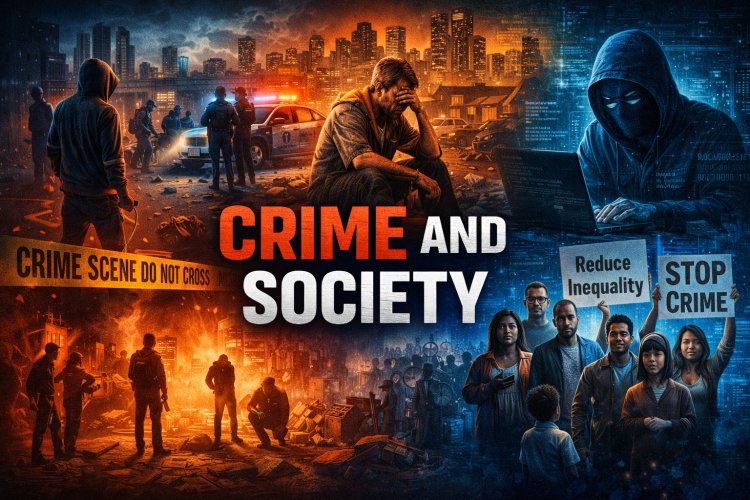
Crime and society is a major topic in sociology and criminology that examines how social structures, cultural values, institutions, and inequalities influence criminal behavior—and how crime reshapes society in return.
Understanding Crime Beyond Law
Crime is not just a legal concept—it is also socially defined.
Key Insight:
What is considered a crime can change over time and across cultures
Examples:
- Certain online activities were not crimes 20 years ago (cybercrime)
- Laws differ between countries and societies
This shows crime is influenced by social norms, power, and culture
Nature of Crime in Society
Crime is:
- Universal → exists in every society
- Dynamic → changes with time (e.g., rise of cybercrime)
- Relative → depends on cultural and legal definitions
Types of Crime in Society
Personal Crimes
- Murder, assault
Property Crimes
- Theft, burglary
Cyber Crimes
- Hacking, online fraud
White-Collar Crimes
- Fraud, corruption
Organized Crimes
- Drug trafficking, gangs

Major Sociological Perspectives
A. Functionalist Perspective (Émile Durkheim)
- Crime is normal and necessary
- Helps society:
- Define right vs wrong
- Strengthen social unity
Example: Public outrage after a crime unites people
B. Conflict Theory (Karl Marx)
- Crime is linked to inequality and power
- Laws often favor the rich and powerful
Example: White-collar crimes sometimes punished less strictly
C. Interactionist Perspective
- Focuses on individual interactions and labeling
If society labels someone as “criminal,”
they may accept that identity and continue crime
Deep Causes of Crime
A. Structural Causes
- Poverty and lack of resources
- Unemployment
- Social inequality
Creates frustration → leads to crime
B. Socialization Failures
- Weak family structure
- Lack of moral guidance
- Exposure to violence
C. Peer & Cultural Influence
- Gang culture
- Media glorification of crime
D. Psychological & Biological Factors
- Mental disorders
- Impulsivity
- Substance abuse
E. Technological Factors
- Internet anonymity
- Easy access to personal data
Leads to cybercrime boom

Crime as a Social Problem
Crime creates multiple layers of impact:
A. Social Disorganization
- Weakens community bonds
- Reduces trust among people
B. Economic Burden
- Losses due to theft/fraud
- Cost of policing and prisons
C. Psychological Effects
- Fear, trauma, anxiety
- Reduced quality of life
D. Political Impact
- New laws and stricter policies
- Surveillance increase
Social Control Mechanisms
Society controls crime through:
A. Formal Control
- Police
- Courts
- Prisons
B. Informal Control
- Family discipline
- Social norms
- Religion and culture
Informal control is often more powerful than law

Crime Cycle in Society
Cycle:
- Inequality / social problem
- Frustration or deviance
- Crime
- Punishment or labeling
- Reintegration OR repeated crime
If rehabilitation fails → cycle continues
Prevention & Solutions
- Education access
- Job opportunities
- Reducing inequality
B. Psychological Interventions
- Counseling
- Addiction treatment
C. Community-Based Programs
- Youth engagement
- Crime awareness campaigns
D. Cyber Awareness (Modern Need)
- Digital literacy
- Data protection
E. Rehabilitation vs Punishment
Modern approach focuses on:
- Reforming criminals
- Reintegration into society

Modern Trends in Crime & Society
- Rise of cybercrime & AI-based frauds
- Increase in white-collar crimes
- Globalization → international crimes
- Social media influencing behavior
Critical Understanding
Crime is not just “bad people doing bad things”
It is often the result of:
- Social conditions
- Economic pressure
- Cultural influences
- Psychological factors
Follow cyberdeepakyadav.com on
Facebook, Twitter, LinkedIn, Instagram, and YouTube
What's Your Reaction?